November 14, 2025Updated: November 24, 2025
Summarize with AI:


Why Your Deck Railing Choice Matters
Deck rails offer a great added aesthetic to your outdoor space, but they represent even more. Railings for decks are critical to safety, especially for elevated outdoor structures. With railings installed on your deck, you are certain to prevent accidents while framing your view and enhancing your property’s style. At Royal Deck, we present you with 5 types of rails from which we help with railing designs for decks in shifting temperatures of Illinois and Georgia: vinyl, composite, aluminum, stainless steel cable, and glass. We will compare these materials in detail, give you expert insight on how to choose the outdoor deck railings for your home, and share proven strategies to maximize long-term beauty and performance.
 Types of Deck Railing Materials
 Types of Deck Railing Materials
The safety and aesthetics of your outdoor living space is subject to your choice of deck railing materials. Durability, cost, and character vary across the different material choices when you choose Royal Deck through your builder. Our premium deck railing options range from reliable vinyl, modern composite, sturdy aluminum, sleek stainless steel cable, and elevated glass. Even across such a large gap in deck railing designs, they all perform very well in Illinois and Georgia’s changing climates.
For a quick side-by-side comparison of each material, review the table below; it aims to help you understand your material choice and what it delivers in terms of price, maintenance, longevity, and when it best suits your home.
| Material | Price / Linear Foot | Lifespan (Years) | Maintenance Level | Climate Suitability | Best For |
|---|---|---|---|---|---|
| Vinyl | $25+ | 40+ | Lowest | Excellent – Weather resistant | Traditional deck styles/budget projects |
| Composite | $25+ | 25 – 30 | Moderate to Low | Excellent – Resists all elements | Traditional Wood Aesthetic |
| Aluminum | $50+ | 35+ | Low | Excellent – rust-proof | Modern deck designs / coastal areas / unobstructed views |
| Cable | $60+ | 30+ | Moderate | Excellent – Stainless | Contemporary decks / panoramic views |
| Glass | $150+ | 25 – 35 | Highest | Excellent (tempered) | Luxury decks / panoramic views / unobstructed views |
It is crucial for you to better understand your railing for deck choice beyond its cost. When we compare types of deck railings, vinyl is the most cost-efficient option, and it requires the lowest amount of effort to maintain. Cable and glass railing deliver exceptional appeal, but require more maintenance.
Composite Deck Railings
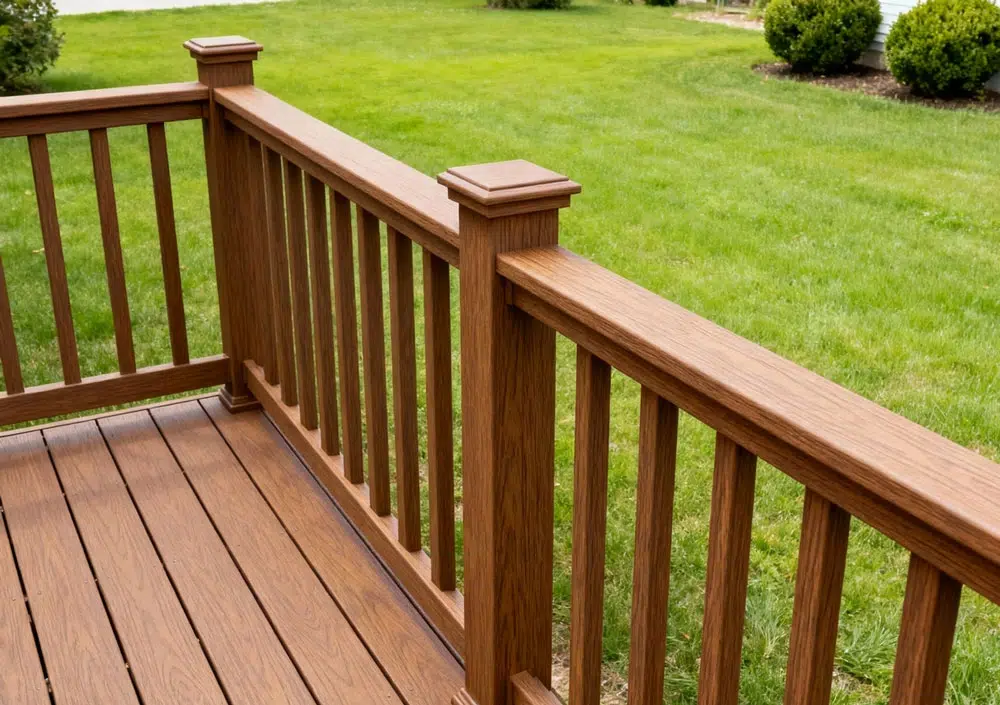 Composite deck railings are a blend of recycled plastic and wood plastic fiber, making it an eco-friendly material that resembles wood in texture and aesthetic without a chance of rotting or warping, and no need for painting and staining. Their designs include UV inhibitors that help keep their colors for an extended period of time, even with high sun exposure.
Composite is very versatile and fares very well in various climates, which places it among some of the most sought-after deck railing styles. Its ability to withstand freezing weather in Illinois and hot and humid weather in Georgia makes it a crucial part of our building options. Composite railings’ diverse profiles range from flat surfaces with the T-Rail design or an elegant shape with the rounded crown top, across its many wood tones (brown, walnut), classic finishes (white), and contemporary shades (black and gray).
The cost per linear foot for composite deck railings is on the lower side, averaging from $25 – $60 per linear square foot for a 25 to 30 year lifespan. While keeping maintenance budgets low, and saving you an average of $3000 in the span of 2 decades, compared to the maintenance cost of wood. This is the best way to have the warmth of wood with modern durability, high performance, and lasting appearance.
Vinyl Deck Railings
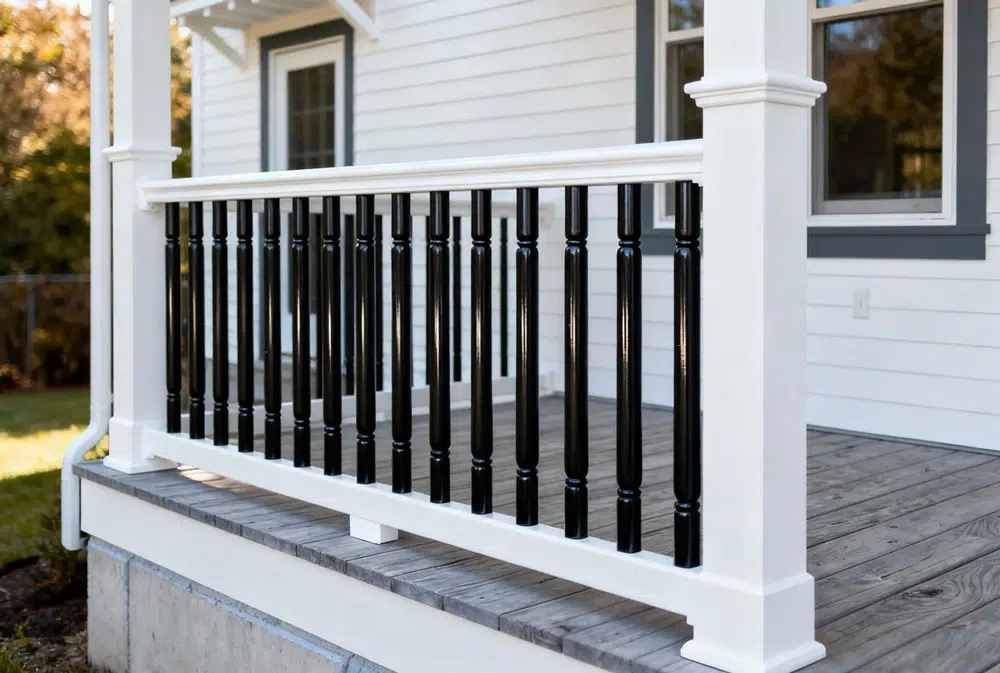 Vinyl deck rails are made entirely from PVC plastic. Our Royal Deck entry-level handrails for decks are an outer layer of PVC vinyl, reinforced with aluminum framing, which adds sturdiness to the rail and ensures compliance with building codes across our service areas. Vinyl is fully resistant to moisture and only requires soap and warm water for cleaning. Its lightweight design and simple installation estimates from $25 to $60 per linear foot, and eliminates a painting or staining budget.
The color options with vinyl are limited to white and cream shades, with a glossy finish. Because colored vinyl rails can fade over the span of 7 years when exposed to UV light, at Royal Deck, we have opted for only white railings with white or black aluminum round balusters. These color sets have proven to outlast any other outdoor deck railing combination.
Vinyl is often seen as the perfect choice for a budget project within a $10,000 spending cap. In addition to being cost-effective and extremely low maintenance, their aesthetics perfectly match traditional homes with white siding features. For vinyl railings, affordable is not equivalent to a short lifespan; they outlast all other railing materials.
Aluminum Deck Railings
 Aluminum rails are lightweight and durable, resistant to moisture, and stable through extreme freeze or heat. They feature a powder-coat layer protecting from corrosion and scratching on a high-traffic deck, and maintain the color vibrancy over time. Aluminum balusters never exceed 1 inch, significantly opening up the sightlines from your deck while complying with safety guidelines. moisture resistance, and it maintains its stability through extreme freeze or heat.
Aluminum’s natural oxide layer ensures rust resistance and longevity. Maintaining your rails would only require rinsing with water to keep their new look, even in a climate like Georgia’s, where salt air corrodes most metals. Their delicate profile is ideal for elevated or panoramic decks, giving your deck a seamless appearance while keeping the view.
Aluminum deck railings’ flexible designs make them an exceptional choice for a deck. Infill options range from traditional horizontal rods to industrial mesh to a personalized mix of aluminum cutouts, in powder coats like matte black, bronze, or white. If you consider that their lifespan is 35+ years, their $50 – $200 per linear foot cost easily becomes a sound investment towards modern appeal, long-term performance, and nearly no maintenance.
Cable Deck Railings
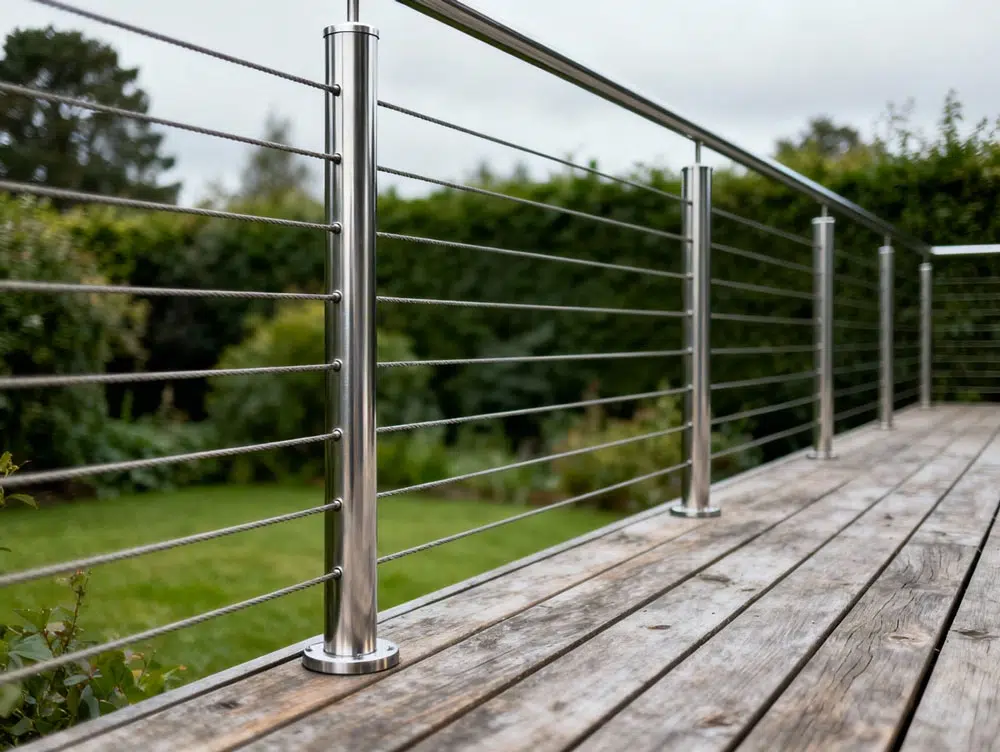 Cable rails are built with 3 to 4 millimeters 316-grade metal cables installed horizontally or vertically and tensioned between 2 aluminum railing posts.They offer a slim and minimalist appearance, ranking them among the most sought-after modern handrails for decks. Their proper installation is a delicate process of using special tools to tension each cable between 2 posts distanced to code at 4 feet, and for the cable to be at more than 200 pounds breaking strength.
Cable deck rails at a 10ft distance are virtually “invisible”. They give your deck a sense of openness and let you enjoy the views in your minimalist or open Illinois or Georgia backyards.
To keep their intended performance, it helps to dedicate 30 minutes twice a year to checking the tension and wiping down the cables with a microfiber cloth to remove any deposits over time. This will upkeep their modern deck railings looking and their safety. The cables are more often installed horizontally. However, for families with younger children who may be tempted to climb them, we recommend vertical cables. Upkeep is how you ensure that they reach their 30+ lifespan and you preserve your $60 to $200 per linear foot investment.
Glass Deck Railings
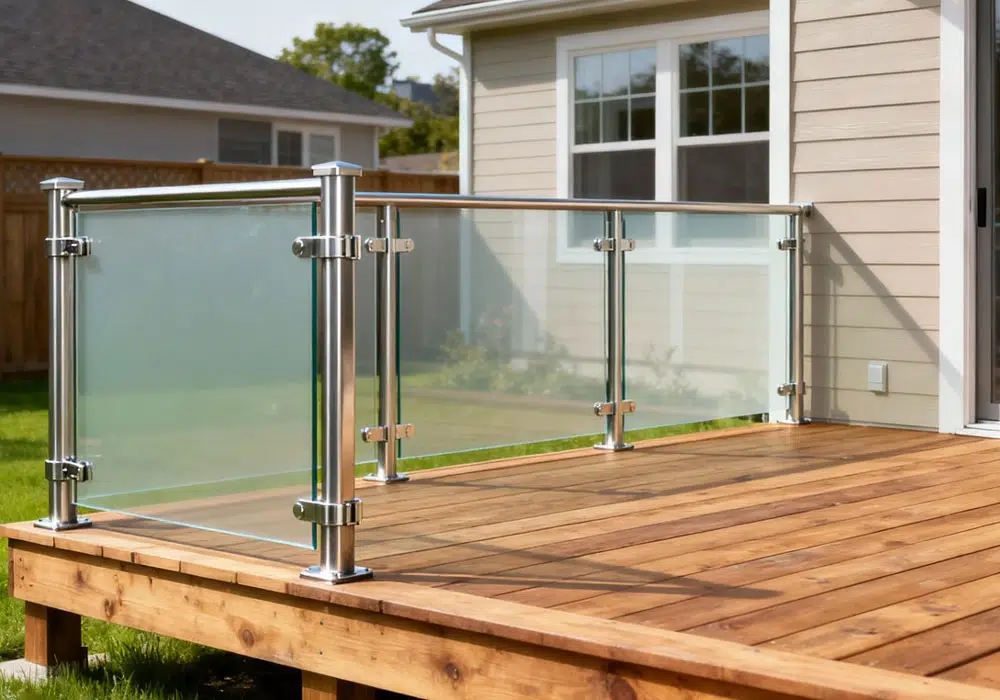 Glass deck railings are often compared to window glass, but we like to remind our Royal Deck clients that these 10 to 12-millimeter-thick panels are proven to be five times stronger than a regular window. Even in the case of breakage, they are designed to break into blunt pieces rather than sharp chards of glass.
Glass railings can be installed in two different ways, but we have chosen to install framed glass rails using stainless steel clamps, which yield about 20% savings from a frameless glass rail and a sturdier installation than a U-frame. Our Royal Deck railing designs feature clear glass or tinted black from the existing variety of transparency levels on the market. Tinted black would be our number one recommendation for a Georgia home, as it would drastically reduce the sun’s impact on the deck.
Choose glass when you wish to keep the view or to elevate an already complex design, adding a 360 visual experience. Glass deck rails are an undeniably beautiful option, but they require the highest level of maintenance. You would need to clean up fingerprints, dust, and water spots on a monthly basis to keep that luxurious finish consistent. In the case of class rails, luxurious means an investment of at least $150 up to $300 per linear foot.
How to Choose the Right Deck Railing for Your Home
The major pillars of choosing the appropriate railings for your home are your lifestyle, your design priorities, your local climate, and your overall budget. Our team of estimators at Royal Deck considers these factors when helping you choose the right deck railing options. We want to ensure that your design matches your home’s architecture, that it meets your hosting needs, and that it will sustain its exposure to the weather. Illinois homeowners would want rails that perform great in freeze-thaw weather, while Georgia homeowners may be concerned with how humidity and heat affect their deck handrails. Because this supports that cost is not just about the price per linear foot, we aim to help you compare long-term value and savings on maintenance. In this section, we will share examples of our favorite designs, like cable railings on a lake view or composite rails to achieve a more traditional look and timeless simplicity.
 Match Your Deck Railing to Architecture and Deck Usage
 Match Your Deck Railing to Architecture and Deck Usage
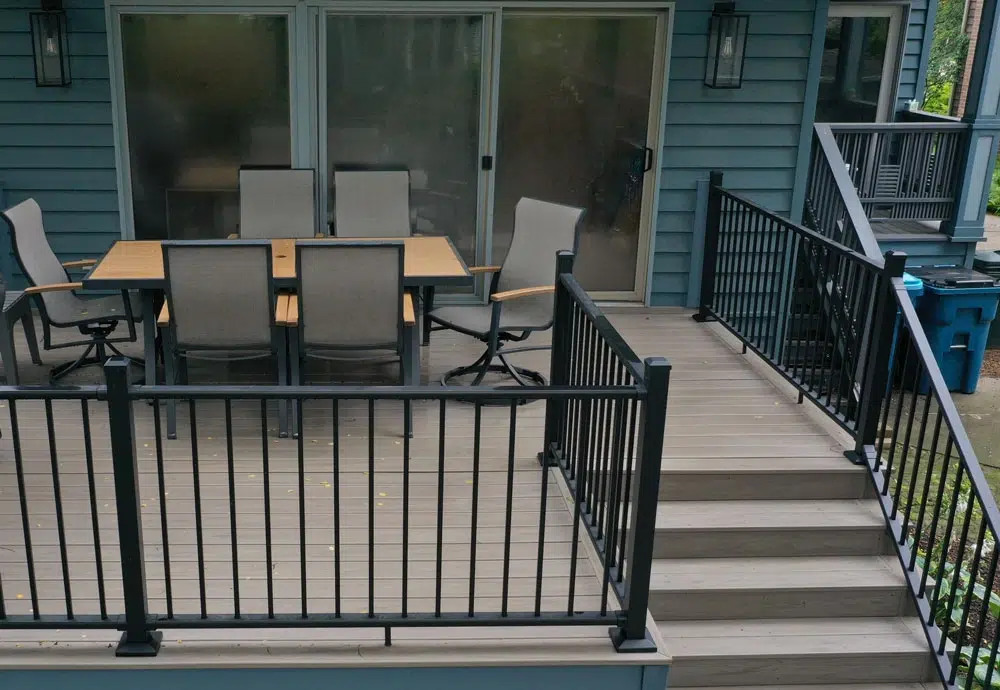
The right design combination between your deck and your home’s architecture should feel cohesive and intentional. We ensure that our Royal Deck estimators always consider your home’s structure when we assist you with your deck design. That is why an on-site deck consultation is crucial to our process.
For traditional and craftsman homes, we’ll mostly recommend vinyl or composite railings. By default, they will feature 4-inch square posts, clean column lines, and symmetrical balusters. If your home’s outdoor design and colors demand it, we would deviate from the standard white of the vinyl rails and offer composite in warm tones like brown or chestnut with a rounded crown top. If you anticipate a high-traffic deck with many days of hosting, you might prefer a flat top to serve as a cocktail rail.
For a contemporary or modern home, aluminum, cable, or glass railings would be ideal. Their more delicate profiles create an aesthetic that would better complement minimalist designs. Their color palettes of black and stainless steel would help keep open lines and preserve the views from your deck. The T-rail design of aluminum rails provides an option to add a composite cocktail top to those modern rails for decks that are designed for hosting.
For ranch-style homes with low decks, you may have the choice to not have railings at all as long as your deck is 30 inches or less above ground, per the International Residential Code – IRC. Should you be just above that requirement, you could still maintain a minimalist and aesthetic look with aluminum rails with half-inch balusters or a standard composite design. Keeping the rails at the required 36inches from the deck surface, in neutral tones of gray, black, or white, without post caps to stay in the natural horizontality of most ranch style designs without overwhelming it.
For a historic home, cream or white vinyl or composite railing with decorative post cap lights will certainly preserve the traditional character of the house. When you choose composite for such a home, you would have the option for square balusters to really stay within the classic feel and historic charm of your home.
The best material choice for your deck is very much subject to what you intend for your outdoor space and your lifestyle. As a busy professional, you may prefer a railing option that requires the least amount of maintenance. Going from wood to aluminum or composite, you are reducing your upkeep time from 20+ hours to 2 to 3 hours per year. If your family is composed of young children and/or pets, you would want to ensure safety at all times by choosing for your balusters to never exceed 4inches of separation and that they are vertical rather than horizontal to create a ladder. Composite is especially safer than wood in this case, as it is a material that does not splinter. If you plan to entertain often on your deck, especially in the evening, you are likely to prefer a railing with a wide flat top like a composite rail, or have that option by creating a composite cocktail top on your T-rail aluminum design. Lastly, the view matters when choosing your rails. You may want to preserve that part of the natural atmosphere that a home overlooking a body of water or beautiful landscape provides; therefore, select glass, cable, or even aluminum rails. Or you may not have a wooded backyard and wish for more privacy while enjoying your deck, and opt for composite railings with tighter balusters.
Deck Railing Budget Planning and Total Cost of Ownership
At Royal Deck, we make sure to emphasise that beyond being a design decision, railings are as importantly, a cost decision. The lowest cost per linear foot does not always align with the lowest ownership cost. It is important to consider whether your material choice requires frequent refinishing, replacement, or professional cleaning. It may be more economical to look into long-lasting, durable, low-maintenance solutions. The best way to avoid surprises down the line is to understand that the upfront cost of your railings and the long-term care ultimately affect your budget.
10-Year Total Cost of Ownership (100 Linear Feet Standard Deck)
| Material | Initial Cost (Materials + Labor) | Annual Maintenance Cost | 10-Year Total Cost | Annual Time Investment (Hours) |
|---|---|---|---|---|
| Vinyl | $2,500 to $6,000 | $50 | $3,000 to $6,500 | 3 to 4 hours |
| Composite | $2,500 to $6,000 | $25 | $2,750 to $6,250 | 2 to 3 hours |
| Aluminum | $5,000 to $20,000 | $25 | $5,250 to $20,250 | 1 to 2 hours |
| Cable | $6,000 to $10,000 | $50 | $6,500 to $10,500 | 2 to 3 hours |
| Glass | $15,000 to $30,000 | $200 | $17,000 to $32,000 | 15 to 20 hours |
| Wood (Baseline) | $2,000 to $5,000 | $500 | $7,000 to $10,000 | 20+ hours |
Budget per Tier
- Value-focused deck budget – $2,500 to $6,000 – Vinyl is immediately the most cost-effective option if you seek quality without overspending. Composite will be a less design-restricted second option for a budget-friendly material choice for railings. They both cost slightly more upfront, but yield considerable savings in maintenance over time.
- Mid-Range Deck Budget – $6,000 to $15,000 – Aluminum and Cable railings are safe investments toward design flexibility and long-term performance. Aluminum is practically maintenance-free and lasts over 30 years, making it a smart decision. Even with the yearly need to adjust the tension, cable railings do provide a big plus in aesthetics and functionality for those lakefront Illinois homes or scenic Georgia suburban homes where you would not want to miss out on the view.
- Premium Deck Budget – $15,000+ – Glass rails hold a high degree of luxury in their appearance, and the benefit of a completely open view with clear glass, or elevated privacy with frosted or tinted sections. However, they demand constant maintenance to keep them free of watermarks or fingerprints. This does not present as a disadvantage of the main design goal is curb appeal and matching a modern home design.
When we compare the cost of railings more critically, we can see that while wooden rails appear to be the most cost-effective solution upfront, they do not represent the best long-term option. You will want to factor in the cost and frequency of staining, sanding, sealing, and the labor hours that go into keeping it safe and appealing. Wood would cost just as much as aluminum in the first 10 years. A decade is only a third of the expected lifespan of a low-maintenance aluminum, composite, or vinyl rail.
 It is also judicious to look into the role that the climate in your area plays in the lifespan of your deck handrails. Illinois’s possible below-zero weather and freeze-thaw conditions can affect vinyl and take 2 or 3 years off of its life over the course of its three decades of expected reliability. As for Georgia’s homeowners, you would want to consider that the humid climate will require your class railings to be cleaned more often to prevent mildew buildup.
Deck Railing Maintenance Guide by Material and Climate
The material of your railings and the area your home is in will dictate the type of care your railings need and at which frequency you should tend to their maintenance. Whether it is Illinois’s frost cycles or Georgia’s humid summer, consistent upkeep ensures that they reach their intended lifespan and that they keep their desirable appearance.
Annual Deck Railing Maintenance Schedule by Material
| Material | Cleaning Frequency | Primary Tasks | Annual Time | Special Considerations |
|---|---|---|---|---|
| Vinyl | 3 to 4 times/Year | Soap and soft brush cleaning; apply vinyl protectant if desired | 3 to 4 hours | Color and UV exposure – we recommend white |
| Composite | 2 to 3 times/Year | Wash with soap and water using a soft brush | 2 to 3 hours | Never exceed 1,500 PSI pressure washing |
| Aluminum | 1 to 2 times/Year | Rinse with water and check bolt tightness | 1 to 2 hours | Rinse salt deposits in coastal areas; no abrasive pads |
| Cable | 2 times/Year | Tension check; wipe with microfiber cloth | 2 to 3 hours | Maintain correct tension for safety and building code compliance |
| Glass | Every 2 to 4 weeks | Clean with glass cleaner and squeegee | 15 to 20 hours | Fingerprints and water spots show easily on outdoor glass |
Seasonal Deck Railing Care for Illinois
Spring (post-winter inspection) – The end of the cold season is the best time to inspect the integrity of your deck railings for any potential damage. It is key to keep in mind any surrounding structures that can cause snow, ice, or branches to fall on your deck and railings. Vinyl is at risk of cracking during freezing temperatures because of unexpected impact while contracted under the cold.
Summer routine care – Washing your rails with soap and a soft sponge should be your monthly summer routine. It would be smart to also check on the structural stability of your posts and gates if you have experienced a lot of spring storms.
Fall (winter preparation) – Fall foliage can cause staining from moldy leaves and organic debris under the snow layer. Remove it all by the first frost to avoid damage to your deck and railings. While you check for proper drainage on your deck during your final clean before winter, you could apply a UV protectant spray on your vinyl rails. In our experience, our choice of white vinyl for our Royal Deck projects performs incredibly well through the season without an issue.
Winter upkeep – When you choose to remove snow from your deck, avoid rock salt and other chemical-based snow removers, as they could be corrosive to the aluminum and its powder coat. You want to use plastic shovels only. Metal winter tools will damage, scratch, or negatively affect your rails. Additionally, you should inspect your deck for structural damage after heavy snowfall.
Seasonal Deck Railing Care for Georgia
Spring (pollen season) – Pollen can stain vinyl or composite if not cleaned off thoroughly and regularly. But it requires a quick, low-pressure wash under 1000 PSI, and you could blow the water away with a leaf blower to avoid leaving damp areas that could result in mold and mildew from pollen buildup. If you experience mold, an oxygen cleaner will be an effective option and would not carry the same scraping chemicals as chloride, which could affect your composite deck, for example.
Summer heat and humidity – If your composite rails show signs of spotting during the high-humidity months, an antimold cleaner will quickly return them to their previous state. Humidity can create stubborn water spots on your rails and require you to clean your composite or glass rails on a weekly basis. During hotter months, lighter composite hues will perform better under UV light. However, you may notice that cables would loosen more; a mid-summer tension adjustment would be a good idea.
Fall (heavy rain preparation) – Preparing for hurricane season between August and October would include removing items from your deck surface that could scratch or hit against your railings from the wind repeatedly pushing furniture or other heavy items against your glass or cable rails, leaving significant damage. After the rain, inspect for damage and remove all debris lodged between balusters and under the bottom rails.
Winter – Georgia winters require significantly less upkeep for your rails than an Illinois winter. After your last fall clean-up, the middle of the season offers the perfect time to perform minor repairs and an additional detailed clean-up before the humidity returns.
Why Choose Royal Deck for Your Deck Railing Project
At Royal Deck, we simplify the choice between safety, design budget, and long-term performance. We have decided to propose rail designs that prove to be durable, low-maintenance, and versatile across climates. With our choice to present you with vinyl, composite, aluminum, stainless steel cable, or glass rails, we know that it fits the diverse needs of homeowners in Illinois and Georgia across varied architectural styles.
We help you select profiles and finishes while keeping structural integrity, comfort, and timelessness as priority factors. We want to make sure that once our skilled builders install your railings, you are left with a choice that aligns with your home’s architecture, your lifestyle, and your budget.
Transform your deck into a beautiful, safe outdoor living space! Contact us today for a free in-home composite deck consultation. Our Illinois and Georgia teams are ready to guide you through material selections for your deck design, with the goal of building a stylish, safe, and lasting outdoor oasis.
Frequently Asked Questions
 What is the best deck railing material?
Especially with so many different types of deck railings, the best deck railing material for your deck depends on your vision, commitment to upkeep, and budget. Vinyl, composite, aluminum, cable or glass each cone with carrying characteristics to match different home styles, safety features and budgets.
How much does deck railing cost per linear foot installed?Based on our Royal Deck projects in Illinois and Georgia, you can expect the price per linear foot for vinyl and composite railings to start around $25, aluminum systems from $50, cable railings near $60, and glass railings around $150 as the premium choice. Those base prices will rise per the deck railing types depending on the complexity of the deck design.
Which deck railing material requires the least maintenance?From the least hands-on care to the most demanding, it would be; vinyl, aluminum, composite, cable and glass. But this order can be challenged depending on the conditions of your backyard and the climate of your area.
Which deck railing material is best for Illinois winters?All five materials would perform well in Illinois winters. Their lifespan through multiple freeze thaw cycles would also depend on the frequency of the maintenance between seasons.

As a leading deck builder in Illinois and Georgia, Royal Deck specializes in creating stunning new decks, resurfacing existing ones, and designing porches that beautifully enhance homes.