February 12, 2026Updated: March 20, 2026
Summarize with AI:


Introduction
Building a deck represents a significant investment in your home’s outdoor living space, but without proper planning and execution, even well-intentioned projects can develop serious structural issues over time. Sagging boards, unstable railings, and deck failure are consequences that stem from common construction oversights.
At Royal Deck, our teams across Illinois and Georgia understand that most deck building mistakes are preventable when homeowners and contractors know what to watch for during the planning and construction phases.
By the end of this article, you will feel more prepared to plan your composite deck project, avoid deck mistakes, and work confidently with professional deck builders in Illinois and Georgia.
Planning and Code Compliance Mistakes
The foundation of any successful deck project begins long before the first post goes into the ground; it starts with thorough planning and understanding local code requirements.
Skipping Building Permits and Inspections
Building permits in Illinois and Georgia serve as your safety certification, ensuring that your deck investment meets essential structural and legal standards from day one. These permits guarantee that footings in Illinois reach depths sufficient to survive freeze-thaw cycles, while Georgia structures can withstand high humidity and storm loads exceeding 115 mph.
Working with licensed contractors helps you avoid fines ranging from $500 to $5,000, insurance coverage issues, and resale complications when buyers discover unpermitted work.
Obtaining proper permits represents the most straightforward way to prevent deck building mistakes that lead to expensive tear-downs or mandatory rebuilds later.
Local Building Codes
Code requirements vary significantly between townships, and understanding these regional differences is critical to proper deck construction. The table below highlights key code differences that help avoid deck mistakes and ensure structural safety:
| Code Requirement | Illinois | Georgia |
|---|---|---|
| Footing Depth | 42″ minimum below grade Must extend below the frost line to prevent heaving | 12″ to 24″ typical depth Must reach stable soil and resist wind loads |
| Primary Structural Concern | Preventing frozen ground from lifting the deck during freeze-thaw cycles | Anchoring against hurricane-force winds (115+ mph) and high humidity |
| Railing Height | 36″ minimum for decks over 30″ high (IRC standard) | 36″ minimum for decks over 30″ high (IRC standard) |
| Stair Riser Height | 7¾” maximum with strict uniformity requirements | 7¾” to 8¼” (slight variations per county amendments) |
| Baluster Spacing | Less than 4″ gap (4″ sphere cannot pass through) | Less than 4″ gap (4″ sphere cannot pass through) |
| Material Requirements | High resistance to freeze-thaw cycles and snow load | High resistance to humidity, rot, and insect damage |
| Ledger Flashing | Required with corrosion-resistant materials | Critical and non-negotiable due to humidity levels |
Understanding these regional variations ensures your deck meets all safety standards while avoiding mistakes when planning a new deck that can compromise structural integrity.
Foundation and Structural Errors
A structurally sound deck relies on three critical components: properly installed footings, secure ledger board attachment, and correct joist spacing. Understanding how these elements interact helps homeowners recognize potential deck problems before construction begins, preventing issues that can lead to deck collapse and costly repairs.
 Inadequate or Improperly Installed Footings
 Inadequate or Improperly Installed Footings
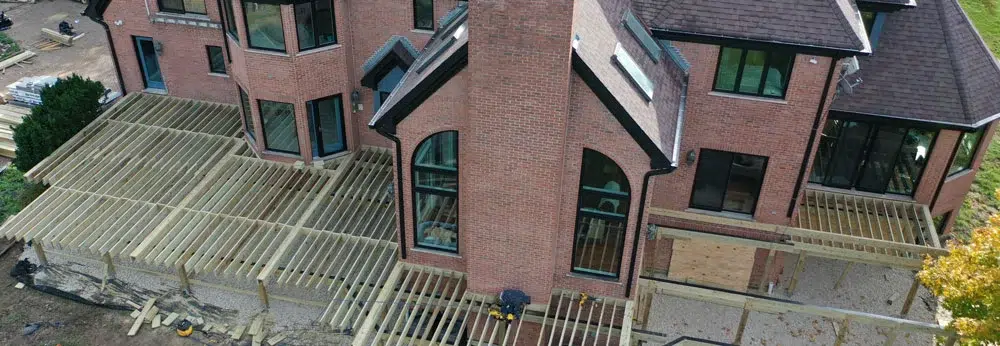
Foundation work sets the stage for everything built above it, and inadequate footings represent one of the most common deck mistakes to avoid during construction. Frost line requirements differ dramatically between regions: Illinois footings must reach 42 inches underground to prevent freeze-thaw damage, while Georgia typically requires 12 to 24 inches to reach stable soil. Proper footing size matters; most Georgia projects require 16-inch diameter concrete piers spaced according to load calculations for your specific dimensions, while Illinois installations commonly use helical piers for enhanced stability in frost-prone conditions.
Consequences of inadequate footings include uneven settling as soil compacts differently, structural shifting that creates gaps between boards, and, in extreme cases, complete deck failure during severe weather when improperly anchored structures pull away from foundations.
Poor Ledger Board Attachment
The ledger board represents the most critical connection point because it anchors your deck to the house and transfers approximately half the structure’s weight to your home’s framing. Proper deck construction requires half-inch lag screws or through-bolts spaced a maximum of 16 inches apart, driven into your house’s band joist, never attached to siding or brick veneer alone.
Flashing installed behind the ledger prevents water infiltration, causing hidden rot in both the ledger and your home’s framing, protecting against moisture damage that often goes unnoticed until the poorly built deck shows instability years later.
Incorrect Joist Spacing and Sizing
Joist layout directly affects surface performance under foot traffic and furniture loads. Standard lumber decking spans joists spaced 16 inches on center, but composite materials require tighter 12-inch spacing to prevent bouncy surfaces, indicating bad deck construction underneath.
Using proper galvanized joist hangers secured with manufacturer-specified connector nails – never screws – maintains high-strength connections to beams, preventing sagging that develops when deck building mistakes compromise structural integrity over time.
Material Selection Mistakes
Material choices directly impact your deck’s lifespan, safety, and maintenance requirements for decades. Illinois freeze-thaw cycles and Georgia humidity both accelerate deterioration when builders use inappropriate materials, transforming a 25-year investment into deck problems requiring replacement within five to seven years.
 Using Wrong Fasteners and Hardware
 Using Wrong Fasteners and Hardware
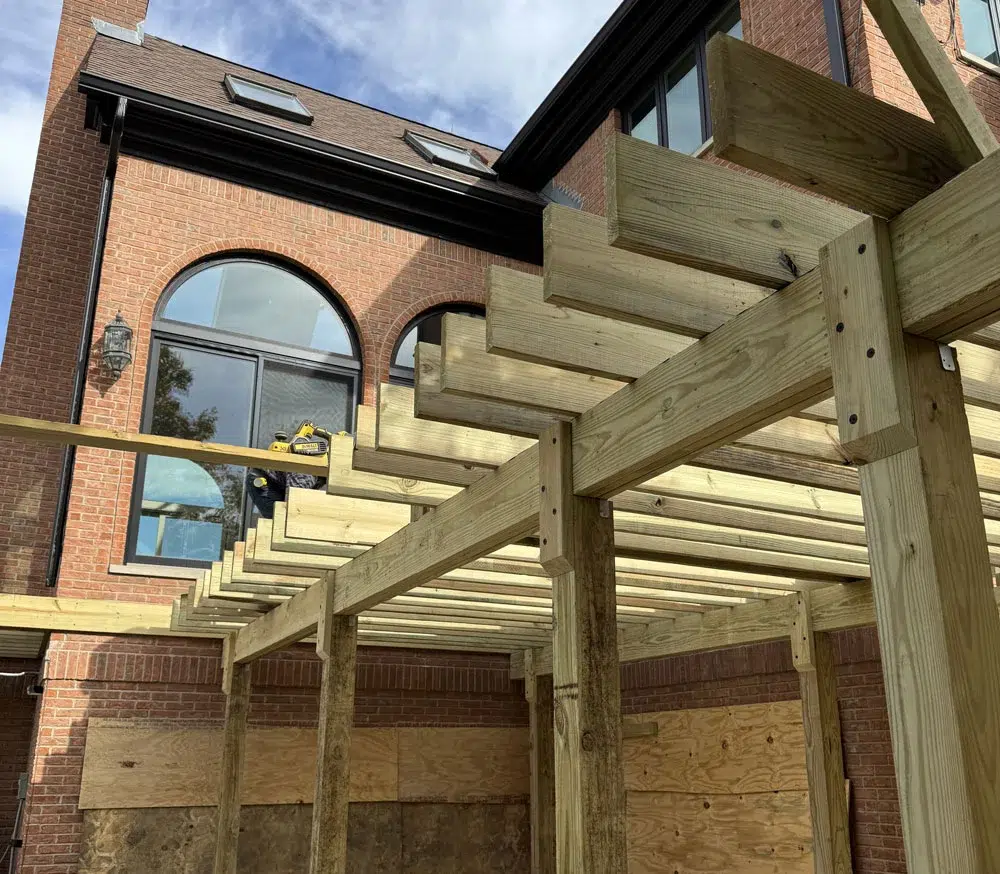
Selecting proper fasteners represents one of the most preventable deck building mistakes because upgrading to corrosion-resistant hardware adds only $200-$300 while preventing thousands in future repairs. Regular steel screws and nails rust within months, losing holding strength and creating loose boards that become tripping hazards.
All structural connections require stainless steel or hot-dipped galvanized hardware rated for exterior exposure. Standard indoor fasteners cannot withstand outdoor conditions, leading to a bad deck that becomes unstable as the metal corrodes.
For composite decking, brand-specific hidden fastener systems engineered for Trex, TimberTech, and Deckorators allow thermal expansion while maintaining secure attachment. These specialized systems prevent the “mushrooming” effect when standard screws compress composite fibers, creating squeaks characteristic of a bad decking job.
Choosing Inappropriate Lumber
One of the common deck building mistakes to avoid involves using standard pressure-treated lumber where ground-contact-rated material is required. Any wood touching soil must carry a “Ground Contact” or “UC4B” rating, not standard treated lumber that rots within years.
For decking surfaces, the choice between wood and composite significantly affects long-term performance and costs:
| Feature | Composite Decking | Pressure-Treated Wood |
|---|---|---|
| Lifespan | 25-30 years with warranties | 10-15 years before replacement is needed |
| Annual Maintenance | Occasional cleaning only | Staining/sealing every 1-2 years |
| Illinois Climate Performance | Excellent freeze-thaw resistance | Prone to cracking and splitting |
| Georgia Climate Performance | Superior humidity and moisture resistance | Vulnerable to rot and decay |
| Insect Damage | Completely immune to termites | Susceptible despite chemical treatment |
| Appearance Over Time | Minimal fading with UV protection | Significant graying and weathering |
| Splinter Risk | Zero splintering throughout the lifespan | Increases significantly with age |
Premium composite brands like Trex, TimberTech, and Deckorators combine these advantages to help homeowners build the deck right from the start, eliminating the maintenance headaches and premature replacement costs associated with traditional wood decking.
Water Management and Drainage Problems
Water infiltration causes more long-term deck structural problems than any other factor, yet damage remains invisible during the initial years until rot compromises critical connections. Following precise deck building instructions for waterproofing prevents slow deterioration that goes unnoticed until boards feel spongy or railings wobble, clear signs that framing members have already degraded significantly.
Inadequate Waterproofing
Proper waterproofing begins at the ledger board connection, where water seeping behind the attachment point rots both the ledger and your home’s band joist, eventually causing deck failure patterns accounting for most collapses. High-quality self-adhering flashing membrane installed behind every ledger board extending at least four inches up the wall sheathing provides essential moisture protection.
Additional Z-flashing above the ledger directs water away from this critical connection before it penetrates the barrier. Specialized joist tape applied to the top edges of all framing joists and beams creates waterproof barriers, preventing moisture from wicking into wood grain.
This preventive measure adds approximately $150-$200 to project costs but extends framing lumber lifespan by 10-15 years, representing one of the highest-return investments in proper deck construction.
Sealing all exposed composite board ends prevents moisture absorption that causes material swelling over time.
Poor Drainage and Ventilation
Proper deck installation requires attention to drainage and airflow, preventing standing water accumulation. Composite boards need gap spacing between 1/8 inch and 1/4 inch to allow rainwater drainage while accommodating thermal expansion.
The entire deck frame should slope away from your house at a minimum of 1/8 inch per foot, ensuring water flows toward the yard rather than pooling. Maintaining at least 12 inches of clearance between the lowest structural members and the ground level provides airflow that dries the area after rainfall, preventing perpetual dampness, creating ideal conditions for mold growth and wood deterioration.
Design and Layout Mistakes
A well-designed deck should feel like a natural extension of your home’s living space, but poor planning creates functional problems persisting for decades. Even structurally sound installations fail expectations when layout oversights lead to awkward furniture arrangements, uncomfortable sun exposure, or maintenance difficulties not considered during design.
 Improper Deck Sizing and Placement
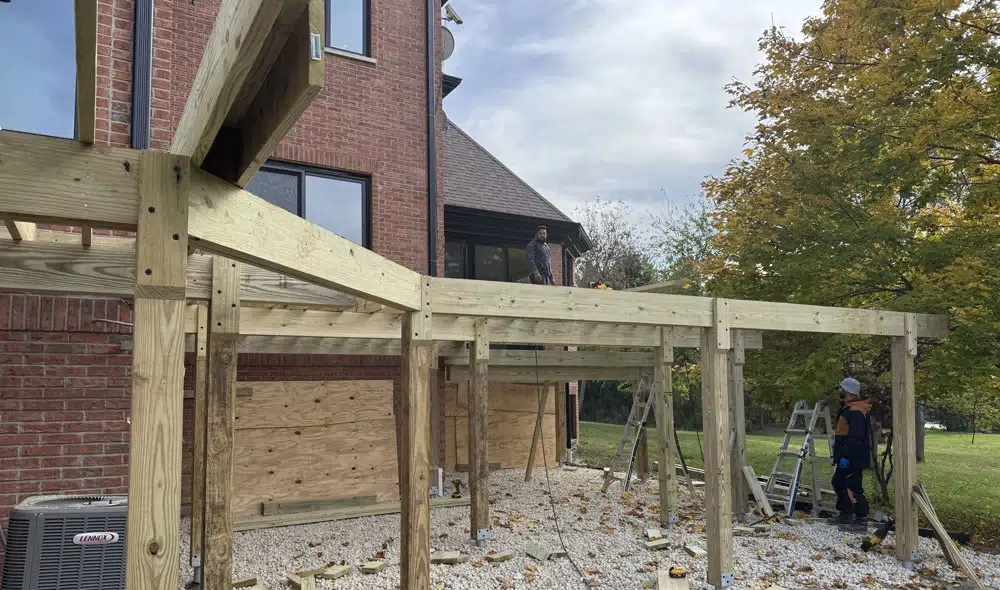 Improper Deck Sizing and Placement
Planning your deck’s size and location requires careful consideration of multiple factors that affect long-term usability and enjoyment. Before finalizing your design, evaluate these critical planning considerations:
- Size and function: A 12×12 deck (144 sq ft) suits small dining, while a 16×20 (320 sq ft) deck accommodates separate dining and lounging zones.
- Sun exposure: North-facing stays cooler in Georgia summers, but may be too shady; west-facing in Illinois offers sunset views, but intense afternoon heat.
- Access points: Placement near the kitchen enables practical outdoor dining; bedroom access creates private retreat spaces.
- Property line setbacks: Most Illinois and Georgia townships require a 10-15-foot distance from boundaries.
- Traffic flow: Ensure comfortable movement between furniture groupings and entry/exit points.
- Privacy and views: Consider sightlines from neighboring properties and desirable views from the deck.
Understanding these factors helps you avoid deck problems related to poor placement that diminish your outdoor space’s functionality and enjoyment.
Ignoring Future Maintenance Access
While composite materials reduce ongoing maintenance compared to wood, thoughtful design requires planning for occasional cleaning underneath. Designing with at least 18 inches of clearance below joists allows comfortable access for removing debris and inspecting structural components – footings, beams, and ledger connections, ensuring everything remains secure over the years. Planning for this access during initial design prevents deck building mistakes that create accessibility challenges requiring costly modifications later when issues need attention or repairs become necessary.
Safety Code Violations
Building inspectors focus intensely on railings and stairs because these elements provide critical fall protection, with deck-related injuries sending thousands to emergency rooms annually. Code violations in these areas represent the most common and dangerous deck building errors found during inspections, particularly on older structures built before current standards took effect.
Incorrect Railing Installation
Railing systems must meet three essential safety requirements to protect users from falls. Height requirements mandate railings standing at least 36 inches above deck surfaces, with some jurisdictions requiring 42 inches for elevated decks exceeding six feet above grade.
Baluster spacing must prevent a 4-inch sphere from passing through any gaps, protecting small children and pets from slipping through openings.
Most critically, railings must withstand 200 pounds of concentrated lateral force applied anywhere along the top rail, simulating an adult falling against the barrier. This structural strength requirement distinguishes proper deck construction from weak, wobbly railings, indicating substandard installation.
Unsafe Stair Construction
Stair construction demands precise measurements because inconsistent dimensions create tripping hazards, especially in low-light conditions. Code-compliant stairs must meet these essential safety requirements:
- Uniform riser height: All risers must measure within 3/8 inch of each other, typically 7 to 7.75 inches
- Tread depth: Minimum 10 to 11 inches for secure foot placement
- Handrails: Continuous handrails are required for stairways with four or more risers
- Lighting: Low-voltage LED lighting in riser faces or post caps for nighttime visibility
Following these specifications prevents tripping hazards that characterize a bad decking job, ensuring stairs remain safe and code-compliant for all users.
Why Professional Installation Matters
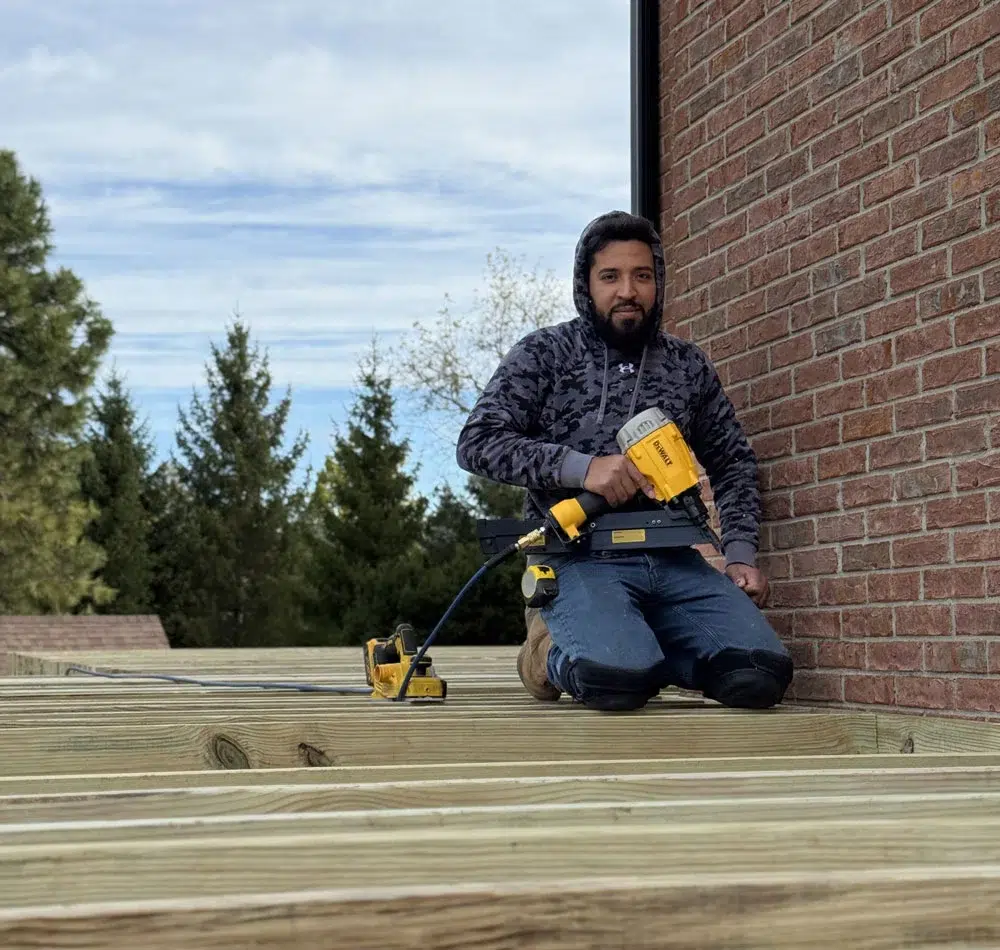
After reviewing the technical complexities of building code-compliant structures, the value of professional installation becomes clear through expertise in regional codes, specialized tools, and manufacturer warranty protection. Understanding Illinois and Georgia building codes ensures your deck meets all structural requirements, avoiding costly violations and failures from deck building mistakes.
Professional builders bring specialized equipment and techniques to critical tasks like ledger attachment and footing installation that guarantee long-term durability. Hidden costs often surprise DIY homeowners: a single ledger replacement after water damage can cost $3,000-$5,000 for removing decking, repairing framing, and reinstalling materials.
Professional contractors also carry comprehensive liability insurance protecting homeowners if defects cause property damage, while homeowner’s insurance typically excludes DIY projects not meeting code requirements.
At Royal Deck, our Illinois and Georgia teams specialize in composite installations using premium Trex, TimberTech, and Deckorators materials. As certified installers, we ensure every project maximizes warranty coverage while meeting quality standards that prevent deck problems for decades, helping homeowners build the deck right and avoid costly repairs compromising safety and investment value.
Conclusion
The pattern is clear: most common deck building mistakes stem from shortcuts in planning, materials, or installation that save minimal money initially but create expensive safety hazards within years. Whether skipping permits, using inappropriate fasteners, ignoring waterproofing, or misunderstanding regional codes, these errors transform a 25-year investment into a poorly constructed deck requiring major repairs or replacement within five to ten years.
Prioritizing proper planning, quality materials, and code compliance shields your home from structural errors. Choosing premium composite decking eliminates maintenance problems while performing flawlessly in Illinois and Georgia climates.
If you are ready to build a properly constructed composite deck that will last decades, Royal Deck’s Illinois and Georgia teams specialize in flawless installation using premium materials from Trex, TimberTech, and Deckorators, helping you avoid the deck building fails that compromise safety and investment value.
Frequently Asked Questions
 What is the most common deck building mistake?
Improper ledger board attachment represents the most dangerous deck building mistake, accounting for approximately 90% of catastrophic structural failures. Contractors who attach ledgers to siding rather than structural framing, use inadequate fasteners, or skip waterproofing create conditions for deck collapse, particularly during gatherings when maximum occupancy loads are present.
How deep should deck footings be in Illinois and Georgia?Illinois codes require footings extending 42 inches below grade to prevent heaving during freeze-thaw cycles. Georgia typically mandates 12 to 24 inches, depending on soil conditions, ensuring your deck is built deck right from the foundation.
Can I use regular screws for deck construction?No, regular steel fasteners rust within months, losing strength while staining composite materials. All structural connections in proper deck construction require hot-dipped galvanized or stainless steel hardware rated for exterior environments, while composite surfaces need brand-specific hidden fastener systems.
Do I need a permit to build a deck in Illinois or Georgia?Yes, virtually all residential decks require permits in both states, specifically structures exceeding 200 square feet or standing more than 30 inches above grade. Permits ensure projects meet structural requirements and safety standards while protecting insurance coverage and resale value.
What's better: wood or composite decking?Composite decking offers decisive advantages: 25-30 year lifespan versus 10-15 years for wood, virtually zero annual maintenance versus yearly staining, superior moisture resistance, and comprehensive warranties preventing deck problems from material deterioration.
How can I avoid common deck building mistakes?Working with experienced, licensed contractors who understand regional codes, use proper materials, and follow manufacturer guidelines represents the most effective way to prevent common deck building mistakes to avoid and ensure long-term structural soundness.

As a leading deck builder in Illinois and Georgia, Royal Deck specializes in creating stunning new decks, resurfacing existing ones, and designing porches that beautifully enhance homes.