September 4, 2024Updated: July 22, 2026
Summarize with AI:



Nick Ceban
Managing Partner & Co-Founder, Royal Deck"After building decks across Illinois and Georgia for years, we've noticed the same pattern: homeowners invest heavily in decking material and furniture, but skip privacy planning entirely, only to end up avoiding their own backyard because it feels too exposed. Privacy isn't an afterthought you bolt on later. It's a design decision that should be made alongside your layout and materials from day one, whether that means a composite screen, a pergola with retractable shades, or a layered planting strategy. The right solution depends on your climate, your HOA, and how long you plan to stay in your home, and getting that match right is what separates a deck you use every day from one that sits empty."
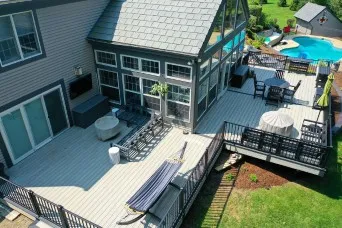
Your deck can be the outdoor room where you decompress, entertain, and enjoy the seasons, which is why we believe it should provide the highest level of comfort, as would a private oasis. Homeowners searching for practical deck privacy ideas will find that open sightlines to neighboring yards can reduce how often and how freely they use their outdoor spaces. This could be the case if your home is in a densely developed suburb of Georgia or Illinois.
Privacy on deck spaces will transform a simple platform into a genuine retreat, and there are so many solutions available today, ranging from permanent elements to flexible, budget-friendly additions. By the end of this article, you will feel more prepared to choose the right approach for your deck, your neighborhood, and your lifestyle.
Why Your Deck Deserves More Privacy
The challenge of maintaining privacy from neighbors is a common concern for homeowners whose backyards are in direct and close view of their neighbors. We want to prevent your well-built deck from going underutilized simply because the space does not feel private enough to fully relax in.
At Royal Deck, we understand that privacy for decks is a design element as important as the decking material you choose or the furniture you place on the surface. A well-planned outdoor privacy screen frames your outdoor space, adds visual structure, and creates a defined sense of enclosure that makes the outdoors feel genuinely restful rather than exposed.
The backyard privacy solutions available fall broadly into two categories: permanent structural additions that become part of your deck’s architecture, and flexible options that can change over time. Some homeowners have combined elements of both, and the sections below walk through each category in detail.
Composite Privacy Screens and Walls
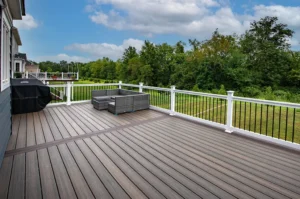
A dedicated composite deck privacy screen is among the most effective permanent solutions available, and it is the approach we recommend most frequently. When homeowners ask how to add privacy to a deck that will hold up for decades without constant upkeep, composite panels are the answer. Products from manufacturers such as Trex, TimberTech, and Deckorators are engineered to resist moisture, UV exposure, and insect damage, which means they maintain their appearance for 25 to 30 years without staining, sealing, or repainting.
This durability is a meaningful advantage over traditional wood deck privacy panels, which typically need refinishing every two to three years and are prone to warping and cracking in climates with significant freeze-thaw cycles. For Illinois homeowners, especially, where winters are long and temperature swings between seasons are dramatic, composite is simply the more practical material for a privacy wall on deck installations. If you already have a composite deck, following a few simple maintenance tips will keep both your decking and any attached privacy screens looking new for decades.
Composite deck privacy panels can be configured in several ways depending on your specific needs:
- Full side walls that create a solid privacy wall for deck spaces, blocking sightlines completely along one or more sides
- Partial screens positioned to address a specific neighbor’s window or a road-facing view
- Decorative lattice panels that filter light and provide partial coverage while keeping an open, airy feel
The material is available in a wide range of colors and textures that coordinate with your composite decking surface, creating a unified aesthetic. A modern deck privacy wall built from composite materials today will still look and perform well three decades from now, which changes the value calculation considerably compared to wood or vinyl alternatives.
Pergolas with Curtains or Retractable Shades
A pergola paired with outdoor curtains or a motorized retractable shade system offers a level of flexibility that fixed privacy walls for decks cannot match. The pergola structure defines your deck space and provides anchor points for privacy treatments along the sides and overhead. At the same time, the curtains or shades can be opened fully to enjoy an unobstructed view or drawn closed when privacy is preferred. For those exploring pergola privacy wall ideas, this combination delivers both structural presence and day-to-day adaptability.
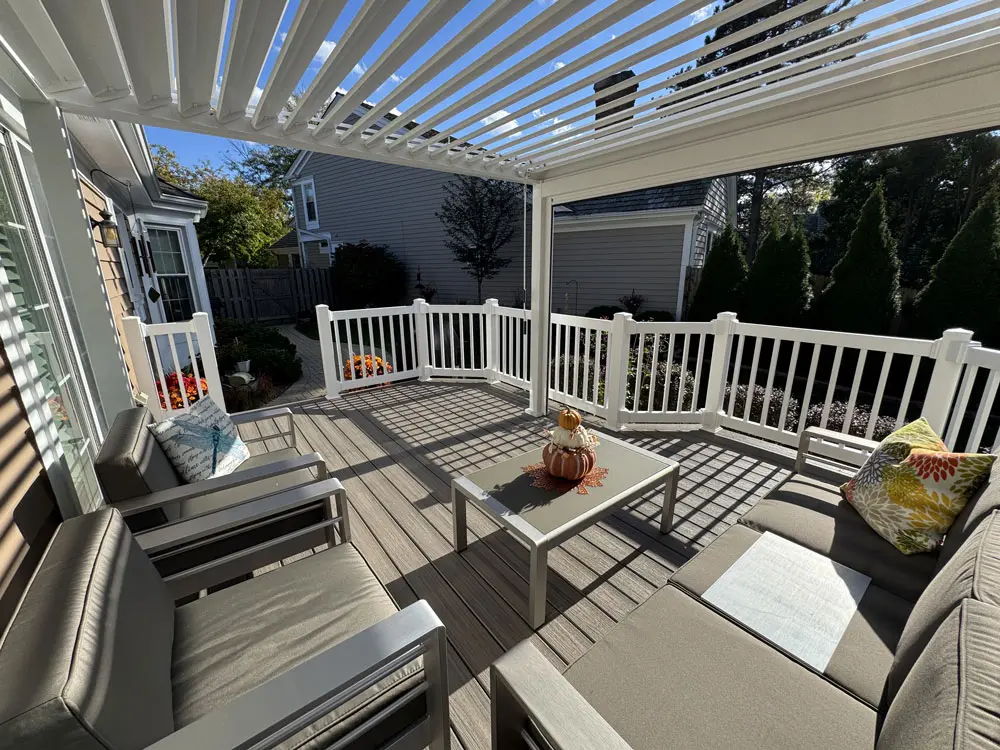 This approach works especially well for homeowners who entertain frequently and want the option to open the space up for larger gatherings. For those who ultimately want a more permanent, four-season solution, it’s worth exploring the benefits of enclosing a deck altogether, which trades some of that flexibility for year-round comfort and protection. A composite pergola holds up through harsh Illinois winters without cracking, splitting, or requiring refinishing, a significant advantage over wood pergola structures that demand seasonal maintenance. Motorized retractable shade systems add convenience and are available at a range of price points depending on span and material quality.
Railing Screens
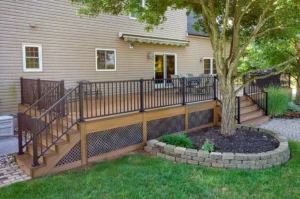
For elevated raised deck privacy ideas, railing screens address a sightline problem that vertical wall solutions often miss entirely. When neighbors or passersby are looking up at your outdoor space from ground level, attaching a screening material directly to your existing railing creates a perimeter barrier without requiring significant structural work. This is one of the most practical and accessible deck railing privacy ideas available, and in most cases, it does not require a permit.
Common options to add privacy to deck railing include:
- Bamboo rolls — a natural aesthetic that works well with organic or tropical design styles and serves as an effective privacy fence on the deck perimeter.
- Artificial hedge panels — replicate the look of boxwood or similar greenery with zero ongoing maintenance, making them a popular choice for privacy panels for deck railing.
- UV-stabilized mesh screens — the most affordable entry point for a privacy screen for deck railing, well-suited to modern or minimalist deck designs.
Each of these options attaches to an existing structure without altering the deck’s footprint or height profile. Keep in mind that confirming requirements with your local building department before installation is always a sound practice, regardless of scope.
Natural Privacy Solutions
Natural privacy solutions use plant material to create living screens that soften the boundary between your property and the surrounding landscape. These backyard privacy landscaping ideas generally cost less upfront, improve over time as plants mature, and add genuine ecological value to your yard. They work especially well when combined with structural elements, filling in the gaps that hard surfaces leave open and giving your outdoor space a layered, finished quality.
Fast-Growing Plants for Illinois and Georgia
Privacy landscaping begins with choosing the right species for your climate, and selecting the wrong plants is the most common and costly mistake homeowners make. Privacy trees along the fence line are an excellent foundation layer, but the species that perform best differ significantly between Illinois and Georgia.
In Illinois (USDA zones 5 and 6), cold-hardy evergreens are the reliable choice:
- Thuja Green Giant grows three to five feet per year and reaches 30 to 40 feet at maturity, providing dense year-round screening.
- American Arborvitae offers a narrower growth habit that fits tighter spaces without overwhelming a smaller yard.
In Georgia (USDA zones 7 through 9), a broader palette of privacy plants for patio and deck areas is available:
- Leyland Cypress grows up to four feet per year and handles heat and humidity well.
- Wax Myrtle is a native Georgia species that thrives in both wet and dry conditions and matures into a dense informal hedge.
- Clumping bamboo varieties create dense screens within two to three growing seasons when managed properly.
Selecting evergreen species in both regions ensures the screening effect persists through winter, which is exactly when privacy from neighbors’ ideas matters most, and deciduous plants offer none.
Living Walls and Vertical Gardens
A living wall pairs a structural lattice or trellis panel with climbing vines to create a vertical garden that functions as both a privacy screen outdoor feature and a genuine design statement. Climbing plants such as Clematis, Black-Eyed Susan Vine, or Star Jasmine fill in a composite lattice base over one to two growing seasons, producing dense, flowering coverage that no hard screen can replicate aesthetically.
Beyond deck privacy, living walls provide a measurable sound-dampening effect, absorbing ambient noise from roads or neighboring properties and adding an acoustic layer of comfort to your outdoor space. A composite lattice base requires no annual maintenance, meaning the structural portion holds up indefinitely while the plants do the aesthetic and acoustic work.
Layered Plant Strategy
A layered approach to landscaping for privacy creates coverage at multiple heights simultaneously, which is more effective than a single row of hedges and significantly more interesting visually. Privacy planter ideas play an important role in this strategy, particularly for homeowners who want to start building privacy immediately without committing to in-ground plantings right away.
The method works by staggering plant heights from the property line inward:
- Tall evergreen trees at the rear to block elevated sightlines from second-story windows.
- Medium-height shrubs in the middle layer fill the gap between the ground and the canopy.
- Ornamental grasses at deck level for texture and movement.
- Privacy planters for deck perimeters to address close-range gaps along the railing.
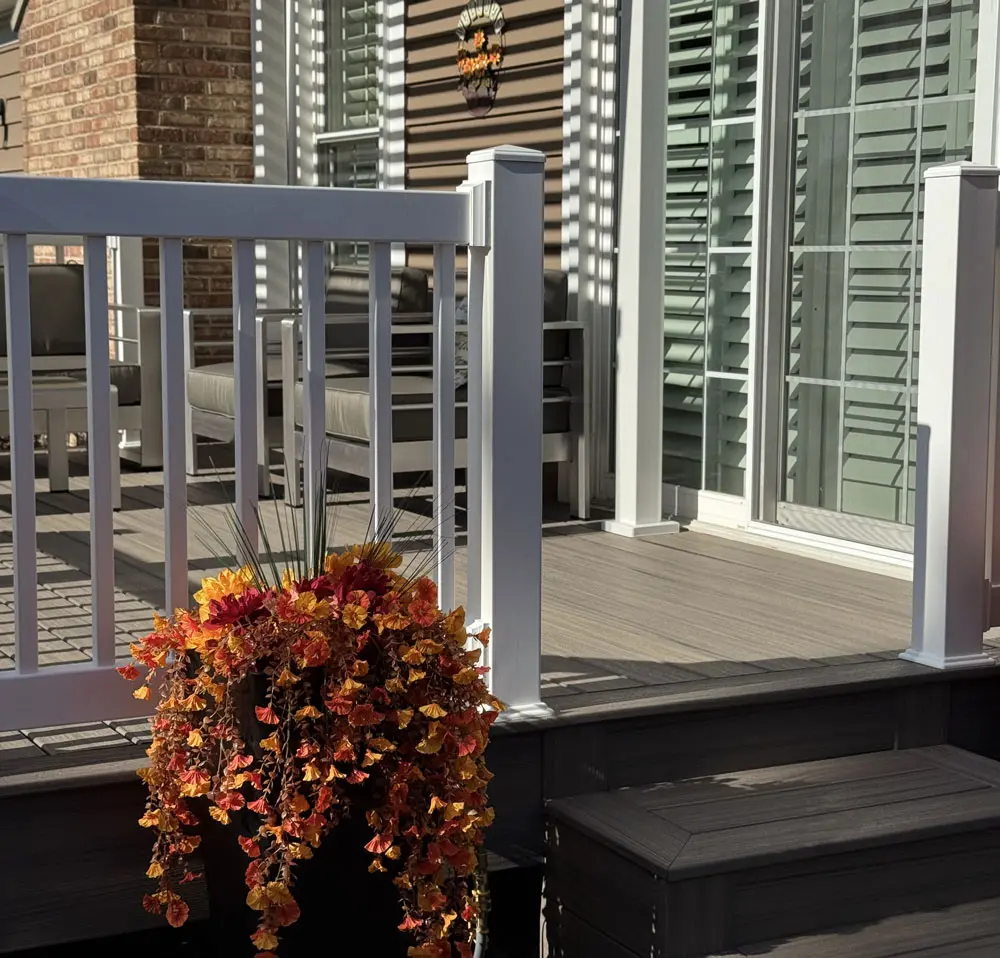 Deck planters for privacy are particularly useful on raised decks where in-ground planting is not an option, and they can be repositioned seasonally to address changing sightlines. This layered structure blocks views from multiple angles rather than just one direction and allows you to build the solution over time as your budget allows.
Permits, HOA Rules, and Local Codes
One of the most overlooked aspects of outdoor privacy solutions planning is the regulatory environment, and it is an area where insufficient research can lead to costly corrections after the fact. It is our goal to help you avoid that situation entirely by understanding what to check before any work begins.
Most jurisdictions impose height limits on fences and screens. A general framework worth keeping in mind before exploring a privacy fence for deck installations:
- 6 feet is the most common maximum height for structures in rear yards.
- 4 feet is the typical limit in front or side yard setbacks.
- Permanent framed additions to an existing deck generally require a building permit in both Illinois and Georgia.
- Permit costs in Illinois typically range from $100 to $500, with inspections adding $75 to $150 in many districts.
- Setback rules apply to privacy structures as well, requiring minimum distances from property lines that vary by municipality.
In Georgia, particularly across the Atlanta metro area, HOA restrictions are prevalent in planned communities and can be more limiting than local building codes. Before purchasing any materials or committing to a DIY deck privacy wall project, review your community’s CC&Rs carefully, as they may specify approved materials, color palettes, and height limits for additions visible from adjacent properties. A practical rule: if the structure is permanent and exceeds 6 feet in height, plan for a permit review and budget accordingly.
Choosing the Right Solution For Your Situation
Understanding the full range of patio privacy ideas and deck privacy options is valuable, but the most important step is matching the right solution to your specific situation. Consider your timeline, your HOA environment, your budget, and how long you plan to stay in your home before committing to a direction.
| Solution | Approx. Cost | Privacy Level | Best For |
|---|---|---|---|
| Composite Privacy Screen | $$$ | Very High | Permanent, low-maintenance coverage |
| Pergola + Curtains | $$ | Medium | Flexible, seasonal use |
| Privacy Fence | $$$ | Very High | Full perimeter coverage |
| Fast-Growing Hedges | $ | Medium (increases over time) | Natural aesthetic, long-term investment |
| Railing Screens | $ | Low to Medium | Elevated decks, quick installation |
| Retractable Shades | $$ | Medium | HOA-restricted areas, flexible needs |
For homeowners planning to stay in their home for 10 or more years, permanent composite decks with privacy screens deliver the strongest return on investment. The material’s 25-to-30-year lifespan eliminates recurring maintenance costs and holds its appearance through the full range of conditions that Illinois winters and Georgia summers can produce. For homeowners in HOA communities or rental situations, flexible, inexpensive backyard privacy ideas such as retractable shades or container plantings offer meaningful coverage without requiring structural approvals.
Your Path to a Private Deck
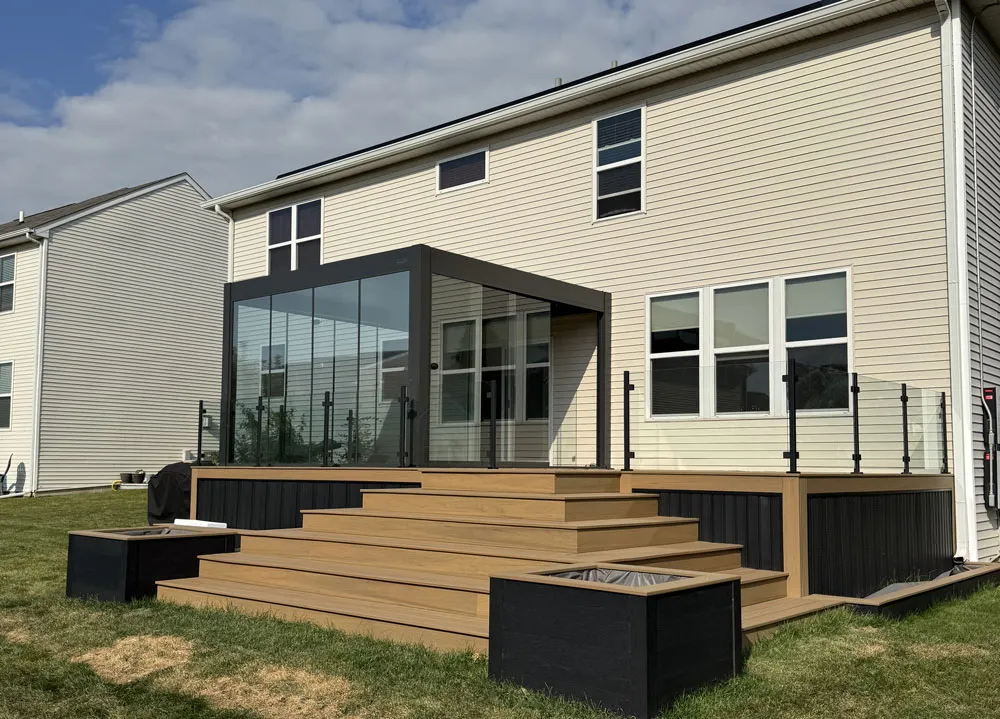
Creating a genuinely private and secluded deck experience is entirely achievable when you approach the project with a clear understanding of your outdoor deck privacy options, your local regulations, and the long-term performance of the materials you choose. Whether you invest in composite privacy panels for decks built to last 30 years, layer fast-growing evergreens along your property line, or combine a pergola with flexible shading, the right privacy wall deck solution exists for your home, your neighborhood, and your budget. If you are ready to move from planning to building, Royal Deck’s Illinois and Georgia teams are here to help you design and install the ideal solution for your outdoor space. Contact Royal Deck to schedule your free in-home composite deck consultation today and take the first step toward a backyard retreat that feels entirely your own.
Sources
- Trex Privacy – Freestanding & Wall Privacy Screens — Product specifications, panel dimensions, powder coat finish options & lifetime warranty coverage for aluminum outdoor privacy screen systems
- TimberTech – Impression Privacy Screen — Composite railing-integrated privacy screen system, wind-load testing requirements, aluminum construction specs & installation guidance for deck and patio applications
- Deckorators – Privacy Lattice Panels — UV-stabilized PVC privacy lattice specifications, spacing standards, color options & weathering performance for deck skirting and screening applications
- NADRA – Consumer Information for Decks, Docks & Railings — Homeowner resources for hiring licensed and insured deck contractors, 10-point deck safety checklist & member directory for Illinois and Georgia
- IRC R507 – Exterior Deck Construction Requirements — Ledger attachment standards, guardrail height minimums, footing depth requirements & structural load specifications for residential deck construction
- AWC DCA 6 – Prescriptive Residential Wood Deck Construction Guide — Framing connection details, fastener specifications & substructure standards applicable to composite deck and privacy wall installations
- Georgia Department of Community Affairs – Prescriptive Deck Details (IRC Amendments) — State-specific framing requirements, guardrail standards, inspector checklist & permit documentation for single-level residential decks in Georgia
- Illinois Residential Building Code – Deck Construction Standards — Permit triggers, frost line footing requirements, load specifications & local IRC amendments governing deck and privacy structure installation in Illinois
Frequently Asked Questions
 How do I create privacy on a deck without a full fence?
There are several effective privacy screen for deck options that do not require a full perimeter fence. Composite privacy panels installed along one or two sides address the most common sightline issues cleanly. A pergola with outdoor curtains creates a flexible enclosure overhead and on the sides. Fast-growing evergreen shrubs provide natural coverage that improves each season. For elevated decks, outdoor privacy screens for decks attached to the railing handle lower sightlines quickly and without a permit in most cases.
Do I need a permit for a deck privacy screen in Illinois or Georgia?
In most cases, attaching a lightweight screen to an existing railing does not require a permit, as it does not alter the deck's footprint or load-bearing structure. However, permanent outdoor privacy walls for decks and pergola additions typically do require a permit in both states. Always confirm with your local building department before starting, as rules vary meaningfully between municipalities.
What plants grow fastest for deck privacy ideas using plants?
Thuja Green Giant and American Arborvitae are the top choices for Illinois, offering growth rates of three to five feet per year and strong cold hardiness. In Georgia, Leyland Cypress and Wax Myrtle establish quickly and provide dense coverage within two to three growing seasons. Selecting evergreens in both regions ensures the screen holds through winter when it is needed most.
What are some cheap ways to block neighbors' view of your deck?
Cheap ways to block neighbors' view without a major construction project include UV-stabilized mesh railing screens, bamboo roll panels, fast-growing container plants positioned along the deck perimeter, and outdoor curtains hung from an existing pergola or shade structure. These low-budget backyard privacy options can be implemented quickly and adjusted over time as your priorities evolve.

As a leading deck builder in Illinois and Georgia, Royal Deck specializes in creating stunning new decks, resurfacing existing ones, and designing porches that beautifully enhance homes.