September 4, 2024Updated: July 22, 2026
Summarize with AI:



Alex Vieru
Managing Partner & Co-Founder, Royal Deck"A bid that comes in 25% below everyone else usually means someone cut a corner you won't discover until year three: no permit, undersized framing, or no workers' comp, which shifts the liability straight to you. Start every contractor conversation by verifying an active state license, a Certificate of Insurance, and whether they're a certified installer for the brand they're proposing - Trex, TimberTech, and Deckorators all require certified installation to honor the full warranty. Always ask for a line-item estimate that breaks out labor, materials, and permits separately."
A deck is a long-term structural addition to your home, and the deck builders you hire will determine whether it lasts 30 years or becomes a liability within five. In Illinois and Georgia, climate conditions amplify every construction mistake: freeze-thaw cycles stress footings and fasteners through winter, while persistent humidity and UV exposure degrade materials year-round. An improperly built deck can fail inspections, complicate a home sale, or pose a genuine safety risk to your family.
The price alone does not tell the full story. A bid that is 25% below market may often hide missing permits, undersized framing, or no workers’ compensation coverage, which would shift liability directly to you. This article walks you through what actually matters before you sign a contract: credentials, experience, project management, and the paperwork that protects your investment.
 Licensing, Insurance, and Code Knowledge
This is where every contractor evaluation should start. Before you look at a single portfolio photo, confirm three things: an active state contractor’s license, general liability insurance, and workers’ compensation coverage.
In Illinois, residential contractors must be registered with the state and often require an additional municipal license depending on the city or township. Georgia requires a state license for projects above certain cost thresholds through the Secretary of State’s office, and most municipalities in both states require local registration before a permit can be pulled.
Do not shy away from requesting a Certificate of Insurance (COI) from your contractor. You can always verify the license number on the state portal yourself. It takes five minutes and eliminates a significant risk.
Codes apply differently to specific builds. In Illinois footings have to be 42 inches below grade to account for the frost line. Georgia’s requirements are shallower but they include specific wind-load provisions for storm-prone areas. Railing heights, ledger attachment methods, and beam spans are all decided by local IRC amendments that vary by jurisdiction. For a contractor to build a deck they would need to be up to date on the current requirements, which would avoid the risk of a failed inspection.
Ask before moving forward:
- Are you licensed at the state level and registered in my town?
- Can you provide me with a COI directly?
- Have you completed and passed an inspection on a project in this area within the last 12 months?
Composite Specialization and Local Experience
Composite deck expertise is very particular. Composite boards from Trex, TimberTech, and Deckorators have specific framing requirements: joist spacing of 12 inches on center for diagonal patterns (versus 16 inches for wood), manufacturer-specific hidden fastener systems, and strict moisture management at the ledger connection. Getting any of these wrong would affect more than aesthetics. It can void the manufacturer’s product warranty before the deck is even a year old.
Manufacturer certifications exist for exactly this reason. Trex’s TrexPro program, TimberTech’s Pro Contractor designation, and Deckorators’ preferred installer program each require installation expertise and project volume. At Royal Deck, we understand that these credentials directly affect the warranty coverage we can offer you on the finished product.
When reviewing local experience, ask to see projects completed in conditions similar to yours: elevated decks, complex stair configurations, or installations on uneven terrain. A deck building contractor who has worked regularly in your area also knows the local permit timelines and inspector expectations, which keeps your project on schedule.
Portfolio and References: What to Actually Look For
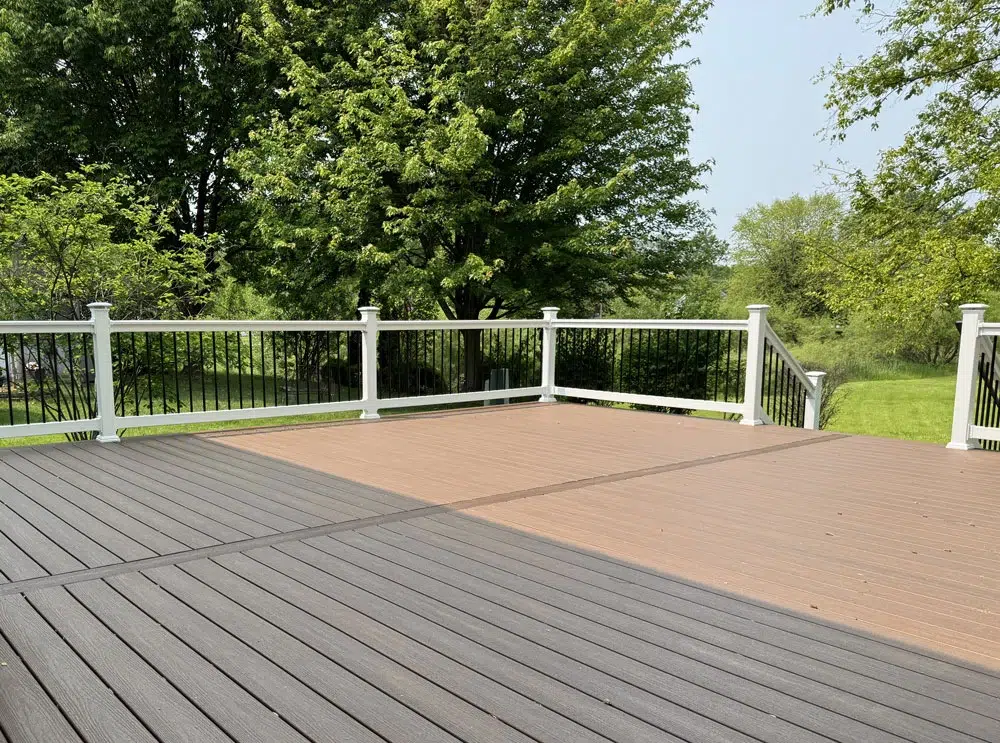
Most deck contractors have completed work comparable to your project in scope and complexity. If you are planning a raised composite deck with a cable railing and stairs, you will learn more from projects that meet all or some of the complex requirements of your deck.
Online reviews are useful for spotting patterns. When reading through reviews, you can be strategic: Did the project finish on the promised timeline? Did the final cost match the written estimate? Did the deck pass inspection on the first attempt? These three questions reveal all you need to know about a contractor’s reliability.
 Project Management and On-Site Organization
Knowing who manages your project day-to-day matters as much as who builds it. At Royal Deck, we know it is crucial to assign a dedicated project manager responsible for scheduling, materials, permits, and daily updates. This relieves you as the homeowner to oversee the sites simultaneously. Neither model is wrong, but you need a clear answer: who is your single point of contact, and how quickly do they respond during the active build phase?
The staffing model is also important to consider. Some deck building businesses like ours use their own employees to deliver consistent results because the same trained crew is present every day, familiar with the company’s standards and accountable within the organization. We avoid variability by not relying on rotating subcontractors, which could introduce variability, especially because of how important composite installation experience is to the success of the final design.
Estimates, Contracts, and Change Orders
We believe that a professional estimate itemizes everything: labor, deck design and installation details, materials (with brand, line, and color specified), permits, site prep, and waste removal making it easier to discuss any key part of the project.
The table below outlines what a solid estimate and contract should include, and what to watch for:
| Element | What Good Looks Like | Red Flag |
|---|---|---|
| Estimate format | Line-by-line breakdown by category | Single lump-sum number |
| Materials spec | Brand, product line, and color named | Unspecified choices |
| Permit and inspection fees | Itemized separately | Bundled or missing entirely |
| Payment schedule | 20–50% deposit, milestone payment, final after inspection | Full payment before work starts |
| Change orders | Written document with revised cost and timeline | Verbal agreement. Nothing is set in stone |
| Warranty terms | Labor warranty duration and scope are stated in writing | Mentioned verbally only |
Consider additional fixed costs that you could miss in a lump-sum number quote: permit fees can range from $100 to $500, depending on your address. Site preparation, such as grading or demolishing an existing structure, can add over $500 to your final quote. Temporary access solutions or protection of other existing structures are also worth clarifying with each contractor before assuming you have the final number.
Contractors for decks should expect final payment should always come after the deck passes inspection and you have completed a walkthrough.
 Warranties and Long-Term Support
For every composite deck project, you should expect 2 specific warranties.
If the deck was installed correctly by a qualified contractor, it qualifies for the manufacturer’s product warranty that covers the decking materials themselves, typically 25 to 30 years for residential use against fading, staining, and defects. This warranty could be voided by improper joist spacing, wrong fastener types, or poor ledger drainage, even when a visible defect appears within the first few years.
The contractor’s workmanship warranty covers the installation itself and typically runs one to five years. Before signing, confirm in writing what it covers, what voids it, and how warranty claims are submitted.
Composite materials still require basic maintenance regardless of their warranty length. Twice-yearly cleaning, keeping debris out of board gaps, and annual framing inspections are reasonable expectations. At Royal Deck, it is our goal to help you understand the maintenance plan upfront so that you can keep both material and labor warranties valid for as long as possible.
Checklist: Questions to Bring to Every Consultation
Rather than evaluating deck contractors from memory, bring this list and note how each one responds:
- Are you licensed at the state level and registered in my town?
- Can you provide a Certificate of Insurance?
- What percentage of your projects are composite decks?
- Are you a certified installer for Trex, TimberTech, or Deckorators?
- Who is my point of contact during construction, and what is their response time?
- Do you use your own employees or subcontractors for the install?
- Can you show me completed local projects similar to mine in scope?
- Does your estimate include permits, inspections, and waste removal?
- What is your payment schedule?
- What does your workmanship warranty cover, and for how long?
A contractor who answers all ten questions directly and follows through on documentation is worth a serious look.
How to Verify a Deck Contractor Before You Sign
Run through these steps in order before committing to any contractor.
- Pull the license number yourself. Take the contractor’s state license number and verify its status directly on the Illinois IDFPR portal or Georgia Secretary of State’s licensing search. Active status and no disciplinary history takes five minutes to confirm and eliminates a significant category of risk.
- Request the Certificate of Insurance before the first meeting ends. Ask for general liability and workers’ compensation on the same document. If the contractor hesitates or asks you to trust a verbal confirmation, move on. Liability for an uninsured crew on your property transfers to you.
- Confirm manufacturer certification for the specific brand being proposed. Ask whether the contractor holds TrexPro, TimberTech Pro, or Deckorators preferred installer status for the product they are quoting. Certified installation is a requirement to keep the full 25 to 30 year manufacturer warranty valid after the build.
- Compare estimates line by line, not as totals. Place bids side by side with each category separated: labor, materials (brand and product line named), permits, site prep, and waste removal. A lump sum with no breakdown is not a real number yet and cannot be compared accurately against other bids.
- Confirm the payment schedule in writing before signing. The final payment should come only after the deck passes township inspection and you have completed a walkthrough. Any contractor requesting full or near-full payment upfront is a red flag regardless of how strong their portfolio looks.
- Get both warranties documented before work starts. Confirm the manufacturer warranty terms for the specific composite brand and the contractor’s workmanship warranty duration and scope in the signed contract. Verbal warranty commitments are not enforceable.
Moving Forward With the Right Deck Builder
The deck building contractor you choose will determine how your outdoor space performs, how it holds up season after season, and how confident you feel every time guests step onto your deck. A builder who is transparent about licensing, comfortable discussing code requirements, clear in their estimate, and structured in their warranty terms is more likely to deliver a safe, durable result.
At Royal Deck, we understand that your deck is an extension of your home and lifestyle. We want to be a partner that will guide you through design decisions, help you evaluate composite options, and manage the entire process from permit to final inspection. If you are ready to take the next step, our Illinois and Georgia teams are available to provide guidance tailored to your property and your budget. Schedule your free in-home composite deck consultation today, or call us at Royal Deck for a free composite deck consultation. We are here to help you build it right the first time.
Sources
- Trex – TrexPro Contractor Certification Program – Certification tiers, installation training requirements & enhanced warranty coverage tied to certified deck builders – trex.com
- TimberTech – Pro Contractor Designation – Installer qualification standards, composite framing requirements & warranty protections for certified installation – timbertech.com
- Deckorators – Preferred Installer Program – Contractor certification criteria, hidden fastener specifications & product warranty conditions for qualified installers – deckorators.com
- NADRA – Consumer Guide to Hiring a Deck Contractor – Vetting criteria for deck contractors, licensing and insurance verification steps & key questions before signing a contract – nadra.org
- IRC R507 – Exterior Deck Construction Requirements – Ledger attachment, joist and beam spans, railing load minimums & footing specifications for residential decks – iccsafe.org
- AWC DCA 6 – Prescriptive Residential Wood Deck Construction – Substructure framing standards, fastener requirements & connection details applicable to composite deck substructures – awc.org
- Illinois IDFPR – Residential Contractor Licensing – License verification portal, registration requirements & obligations for deck contractors operating in Illinois – idfpr.illinois.gov
- Georgia Secretary of State – Contractor Licensing Division – State license thresholds & verification resources for contractors building decks in Georgia – sos.ga.gov
- Illinois Residential Building Code – Frost line footing depth standards, permit submittal requirements & IRC local amendments for Illinois deck construction – ilga.gov
- Georgia Department of Community Affairs – State Minimum Standard Codes – Residential deck permit requirements, wind-load provisions & inspection stages for Georgia projects – dca.ga.gov
Frequently Asked Questions
 How many quotes should I get before choosing a deck builder?
Gathering at least three written estimates is a great way to start your project. Having a few different perspectives helps you understand the local price range for your vision and gives you a feel for how different builders present their work. It’s a helpful step in finding the team that feels like the best fit for your home.
What is the difference between a general contractor and a dedicated deck building contractor?
A dedicated deck contractor focuses their entire day on outdoor structures. This specialization means they bring a deep understanding of composite systems, local permit steps, and the specific framing details that keep a deck sturdy for decades. While general contractors handle many types of home projects, a specialist’s focused experience ensures every detail of your outdoor living space is handled with ease.
Is it worth paying more for a certified composite deck installer?
Choosing a certified builder is about experience, not necessarily a higher price tag. Your total cost is simply based on the materials and labor for your specific project. A certification like TrexPro means you’ve chosen a partner recognized for their expertise, which often allows them to provide you with enhanced material warranties that only a specialist can offer.
How do I compare bids from different contractors fairly?
The best way to compare your options is to look for estimates that provide a clear breakdown of each category. Having labor, materials, permits, and site prep listed as separate items helps you see exactly what is included in your project. If you see a bid with a single total, we recommend asking for a few more details so you can be sure every important step is covered from the start.

As a leading deck builder in Illinois and Georgia, Royal Deck specializes in creating stunning new decks, resurfacing existing ones, and designing porches that beautifully enhance homes.