October 13, 2025Updated: June 29, 2026
Summarize with AI:



Nick Ceban
Managing Partner & Co-Founder, Royal Deck"If your frame is still in great shape, resurfacing with composite floors and new upgraded rails is almost always the better call, which will add 15 to 25 more years to the full deck structure. It is a simpler decision once you've pulled up the old boards: if the joists are sound and the ledger isn't compromised, it's an easy resurface; if there's widespread rot or the connectors are corroded, it is safer to rebuild. If you should choose between patching a deck that's already past the point of repair or a proper resurface or replacement from the start, invest those $2,000 to $4,000 for spot fixes over a few years, into a true refresh with composite. Whether that is resurface or a custom new build."
Choosing the Right Deck Solution
As Royal Deck, we want to guide you through deciding on alternatives to replacing a deck by looking first at the condition of the structure beneath the surface. The strength of the footings, posts, beams, joists, and ledger board will determine whether you need to restore your deck or if redoing your deck is a better investment.
If your frame is still in good condition, a resurface with composite boards can give your outdoor space a second life while cutting down on maintenance. If you are experiencing more serious issues like spreading rot, warped beams, or corroded connectors, rebuilding your deck may be a safer and more cost-effective path.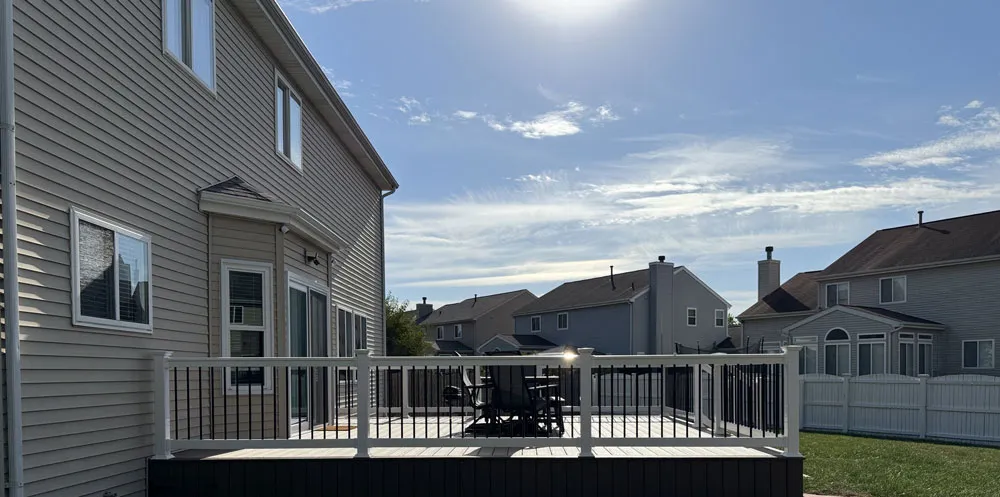 Homeowners in Illinois and Georgia have a concern for cost and longevity, and we recommend composite decking. Composite boards are designed to resist moisture, fading, and everyday wear, and they are backed by strong warranties. This eliminates the constant sanding, staining, or sealing you may experience with your current wooden deck, while making the composite deck replacement cost predictable over a 5 to 10 years.
Whether resurfacing or replacing a deck, our goal at Royal Deck is to help you make a choice that keeps your confidence in your investment over the years spent on your new outdoor space.
What You’ll Learn
Find out the best practices for what to do with an aging deck. We will cover each possible path to consider between targeted repairs, resurfacing, and building a new deck. You will also learn which signals to watch for, how to think about short-term and long-term costs, and how to avoid common budgeting or scheduling mistakes.
Quick Decision Framework (Repair vs Resurface/Redeck vs Full Replacement)
- Repair: Localized issues like cracked boards, loose railings, or springy steps can sometimes be solved with spot fixes. These repairs may extend your deck’s life for one to three years, as long as the substructure is still sound.
- Resurface or Redeck: If the frame is strong but the boards or railings are worn, resurfacing the entire deck is the logical step. Replacing the visible surfaces with composite reduces ongoing maintenance, refreshes the look, and extends the deck’s life.
- Full Replacement: When there is widespread rot, warped beams, corroded connectors, or a failing ledger, a new deck is the safest choice. The “50% rule” is practical in these situations: if repair + deck renovation costs approach half the price of rebuilding, starting from scratch is a better investment.
Cost Overview: Repair vs Resurface/Redeck vs Full Replacement
When evaluating your old deck, the three main paths are deck repair, resurfacing deck boards, or a full replacement.
- Repairs are limited to spot fixes like swapping out a few boards or tightening railings.
- Resurfacing involves removing worn decking, inspecting and reinforcing the frame, and then installing new composite boards with updated railings.
- Full replacement requires demolition and disposal of the old structure, and starting from scratch with new framing, decking, railings, and stairs installation.
Each of these options comes with its own cost, completion timeline, and long-term expectations. It is invaluable to understand why these differences will help you make confident choices as a homeowner.
| Option | Scope | Typical Cost Range* | Completion Timeline | Expected added Lifespan | Maintenance | Risks / Unknowns |
|---|---|---|---|---|---|---|
| Repair | Spot fixes, board swaps, railing tightening, cosmetic coatings | Low | 1 to 3 days | 1 to 3 years | High-frequency upkeep required | Hidden frame damage may spread, limited return on investment |
| Resurface (Redeck) | Remove decking, inspect frame, add joist tape or flashing, new composite boards, railings | Moderate – cost to redeck a deck lower than a full rebuild | 4 to 7 days | 15 to 25 years (when choosing composite) | Low – basic cleaning required | Frame integrity – hidden fasteners and flashing add to the total expense |
| Full Replacement | Demolition and disposal, new footings, new frame, new decking, railings, steps, opportunity for added features like roofs and outdoor kitchens | High | 5 to 7 days for structures under 600 sq ft | 25 to 50 years (composite) | Low: predictable upkeep | Permit cost, HOA approvals, inspections, disposal, and removal costs |
*Ranges vary by size, material tier, and labor conditions. We are mindful to present you with Royal Deck quotes that itemize each step of the building process and include disposal, hidden fasteners, and joist tape/flashing.
Composite Advantage and Lifecycle Value
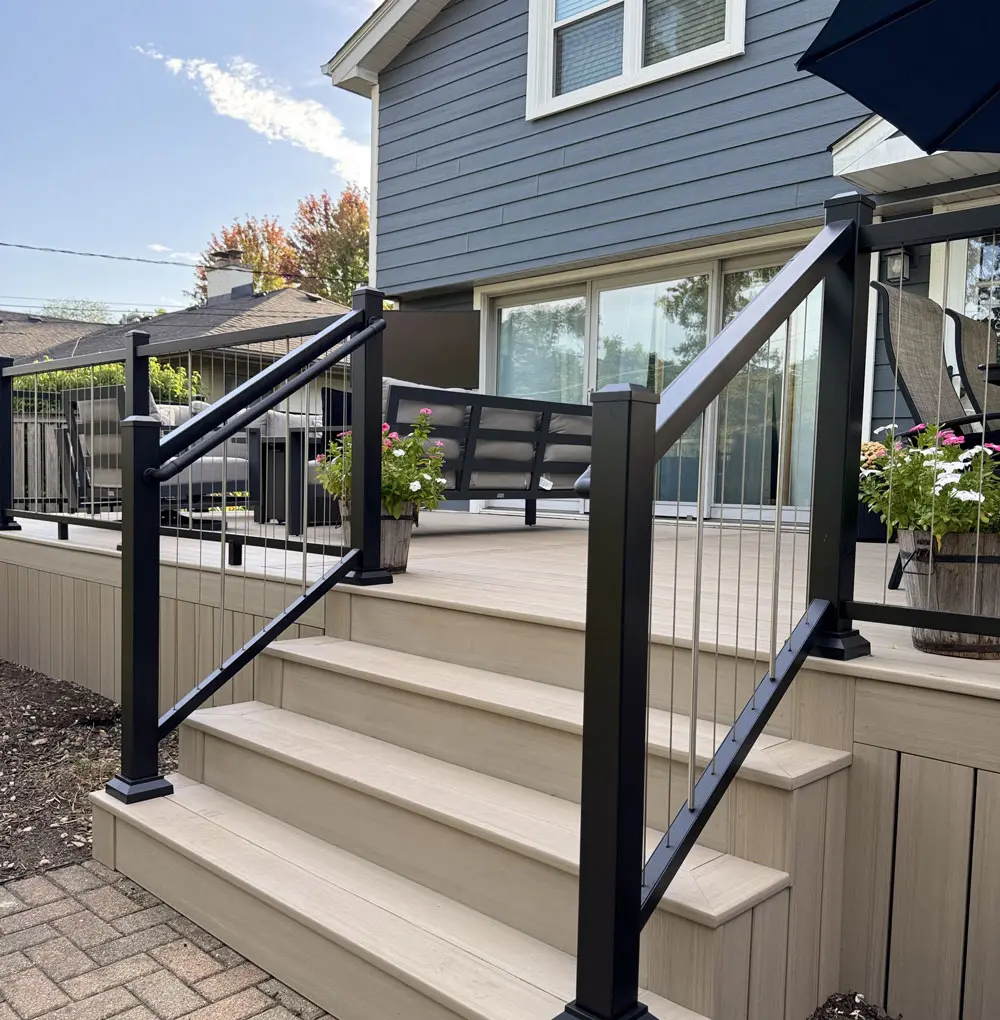
Choosing composite for a new build or a resurfacing project goes beyond appearance. Composite materials require only routine cleaning, maintain a consistent look, and resist moisture and insects. Most collections carry 25-year or longer warranties that cover fading, staining, and structural performance, giving homeowners confidence in their investment. Compared to wood, which requires regular sanding, staining, and sealing, composite provides predictable upkeep, safer daily use, and reliable value over time.
 Pricing Factors That Drive Your Budget
The cost of rebuilding a deck or starting fresh with a custom composite design depends on three main categories:
- materials,
- labor complexity,
- add-ons.
Those are the three pillars of your final investment, and they determine how predictable your estimate will be.
Material Tiers (Composite/PVC: Entry, Mid, Premium)
The cost to replace decking boards with composite is dependent on the performance level of the product you select. Entry-level offers affordability and durability, mid-tier balances value and appearance, and premium lines provide the most realistic textures and extended warranties.
- Premium: stronger capping, UV, and scratch resistance.
- Wider palettes: greater color and texture realism.
- Warranties: often 25 years or more.
- Mid-tier: best balance of cost, durability, and look.
Labor & Complexity (Per-sq-ft Reality)
Each deck is uniquely complex, so the average cost to replace a deck per square foot varies with the design. Here is what directly affects the cost to build or rebuild a deck and influences labor.
- Height and multi-level builds increase labor hours.
- Railings and stairs add disproportionately to materials and labor.
- Curved or multi-sided shapes create more cutting and waste.
- Demolition, cleanup, and delivery access also influence cost.
At Royal Deck, we understand the unique nature of any given project, which is why we offer free in-person estimates that allow us to carefully assess the project site and your vision in order to present you with an itemized quote that fits your expressed budget.
Structure & Add-Ons (Where Budgets Jump)
The structure of your composite deck requires frames that are properly reinforced for your safety and its long-term performance. Below are reasons the budget may rise up.
- Joist spacing and stair reinforcement must match composite specifications.
- Fastener compatibility includes hidden systems and accessories.
- Joist tape and flashing extend frame life and prevent moisture damage.
- Add-ons such as railings, lighting, or pergolas increase cost but enhance value and comfort.
Restoration & Resurfacing (Redeck): Step-by-Step
When the frame of a deck is still sound, resurfacing deck boards with composite provides a fresh start without the higher cost of a new structure. The process follows a clear sequence designed to ensure safety, durability, and long-term performance.
Preparation starts by clearing the existing deck and surrounding area to create a safe and organized work site.
Local repairs will follow the removal of old decking, which can include replacing damaged joists or beams in the substructure to reinforce the frame. If the damage is significant enough that the repaired frame would not pass city inspection, resurfacing is not a viable option, and planning for a complete deck rebuild becomes necessary.
Resurfacing/Redecking continues with the application of joist tape for extended frame protection, followed by the installation of new composite boards with hidden fasteners and fascia.
Depending on the project scope, this stage may also include rebuilding stairs, upgrading low-maintenance railings, adding skirting, and conducting a final inspection to confirm safety and quality.
 Full Replacement: Scope, Sequence, Timelines
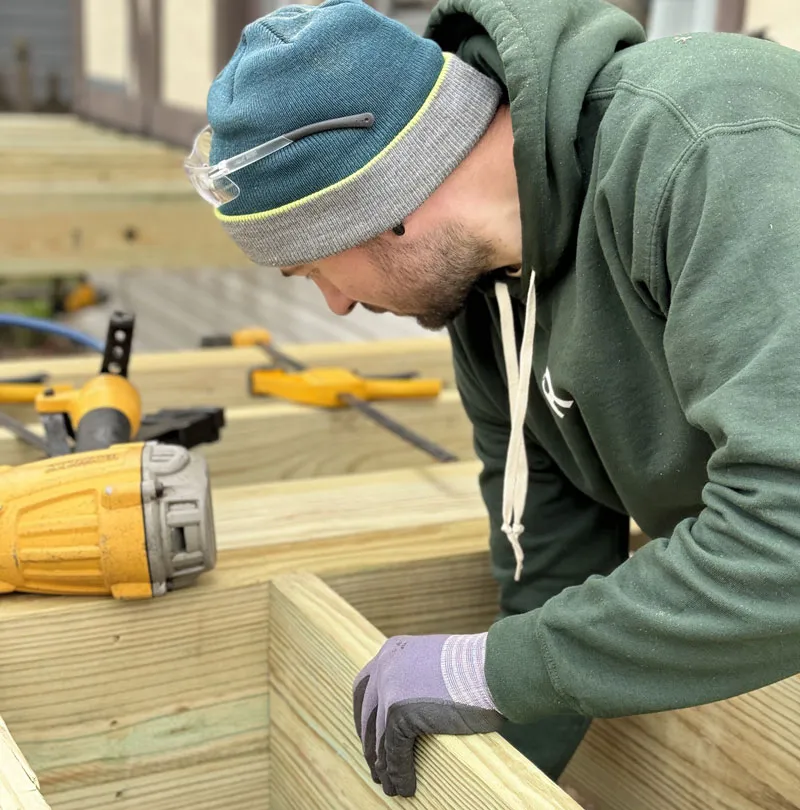
A full deck rebuild is the right solution when the frame shows widespread rot, corrosion, or other code compliance issues.
The process begins with demolishing and disposing of the old structure. Then, we install new footings and build the frame with new posts, beams, joists, and a properly secured ledger board when the deck is attached to the house. Our Royal Deck builders always make sure to install flashing for waterproofing and rot prevention behind the ledger board. Then, come time to install the composite decking replacement, along with the stairs, lighting, and the low-maintenance railings you would have selected to complete your vision. Your township would then come by for a final inspection to ensure safety and code compliance.
Keep in mind that project timelines vary by project size and conditions. A standard new build often takes five to seven days, including the inspections for footings, framing, and final sign-off. However, projects over 600 square feet may require additional time, and full entertainment builds that include a roof, kitchen, or electrical features can extend to 15 days or more. Weather, logistics, and permit approvals also influence the overall schedule.
Budget Planning Workflow (Checklist + Template)
When looking into your deck replacement cost or redecking cost to better plan for your project, it is helpful to break it down into multiple stages. That kind of projection workflow can follow this sequence: goals and vision, desired composite tier, installed cost per square foot range, railings and steps, labor and complexity, frame reinforcement, disposal and logistics, inspections and fees, and finally a 10 to 20 percent contingency. At Royal Deck, we encourage you to ask for two to three like-for-like estimates to help shed some clarity and bring you confidence in your investment before work begins.
Budget Checklist
| Item | Typical Range | Notes |
| Demolition / Cleanup | Varies by size | Includes removal of old deck boards and framing |
| Delivery / Access | $500 to $2k | Varies with site conditions |
| Joist Tape / Flashing | $500 to $1,000 | Extends frame lifespan |
| Footings / Frame | $6k to $12k | Pressure-treated lumber for the new support |
| Composite Decking | $8k to $20k | Entry to mid to premium collections |
| Hidden Fasteners | $500 to $1,500 | Improves appearance, adds labor |
| Railings (linear ft) | $3k to $10k | Vinyl, aluminum, glass, cable, or composite |
| Stairs (runs) | $2k to $6k | Depends on height and structural support |
| Lighting | $1k to $4k | Optional feature |
| Inspections / Fees | $500 to $2k | Local township requirements |
| Contingency | 10% to 20% | Safety buffer for unforeseen expenses |
Hidden Costs and Cost-Saving Strategies
Planning a deck renovation or new deck build may have hidden costs. It may occur that after removing the top surface of your deck, more damage exists. This could be adding additional support, replacing corroded connectors, missing clips or adapters, and correcting installation errors from the initial build. Electrical work or integrated lighting can also increase totals.
However, you have opportunities to control the overall deck remodel cost during the planning process. Simplifying the shape of your deck will reduce material waste, limit the railing perimeter, and lower labor costs. Choosing a mid-tier composite to balance aesthetics and durability will better manage the budget. Designing a deck that fits standard spans and board widths will make the building process more efficient. You can also eliminate nonessential features like integrated lighting.
Get a Composite Resurface or New Deck Estimate
If you are considering the cost to replace decking or the cost to redeck a deck with composite, Royal Deck provides free, no-commitment estimates for homeowners in Illinois and Georgia. A representative meets you on site, reviews the existing structure, and discusses the best solution for your vision and budget. This consultation ensures your project is accurately scoped and tailored, giving you the confidence to move forward with a clear plan.
Frequently Asked Questions
 Is deck replacement more cost-effective than deck repair, and in which scenarios does replacement make the most sense?
When your deck has widespread rot, corroded connectors, or failing ledgers, the cost of a deck replacement is without a doubt the more practical and safer investment. It is a great solution for small, isolated problems, but not a long-term one. Royal Deck focuses on long-term solutions, which is why we would rather replace the decking and address all visible and hidden issues.
What is deck resurfacing (redeck), and when does it make sense compared to a full replacement of an old deck?
Resurfacing a deck is possible when the frame is solid and up to code. Redecking with composite reduces maintenance, refreshes appearance, and extends the life of your deck at a lesser cost than a new build. However, a full replacement becomes necessary when the frame shows significant damage or when you add heavy features like a roof or gazebo.
How much does it cost to replace deck boards with composite, and what factors drive that price up or down?
The cost of replacing your deck boards with composite depends on the size of your deck, the composite tier you want, and the labor for railings, stairs, or complex shapes installations. Hidden fasteners and joist tape will add to the upfront price of your deck, but these details help extend the lifespan of your frame.
What is the average labor cost to replace deck boards, and why can labor vary significantly by project?
The labor cost to replace deck boards with composite depends on the number of stair runs, the height of your deck, the total length of railings, and design complexity. Elaborate deck designs require precise cutting, which means more labor hours. That is why Royal Deck provides itemized quotes based on an in-person assessment rather than a flat per-square-foot number.
How much do deck railing and stair replacements typically cost, and why are these line items often the priciest?
The cost of replacing railings and stairs is higher because these features require more structural support, precise measurements, and safety compliance. Higher stairs sometimes require footings, and railings represent one-third of the total budget of your deck construction.
When should deck boards, joists, or posts be replaced instead of repaired on an aging deck?
When boards and joists show heavy rot, or posts have shifted, a new deck becomes the only safe solution. Isolated repairs in these cases only delay the inevitable and risk your safety.
Do I need a permit to replace or resurface a deck, and what inspections should I expect during the process?
Most townships require permits for all deck projects. You can always expect inspections at key stages like footings, framing, and completion. Royal Deck coordinates these inspections during every project so that compliance is clear and timelines remain on track.
What are realistic alternatives to replacing a deck (like redecking or covering old boards), and what are their limits?
Resurfacing with composite is the only reliable alternative to full replacement when the frame is still solid. Spot repairs might seem inexpensive at first, but they do not provide lasting safety or value. Rebuild is the sustainable solution to a compromised structure.

As a leading deck builder in Illinois and Georgia, Royal Deck specializes in creating stunning new decks, resurfacing existing ones, and designing porches that beautifully enhance homes.