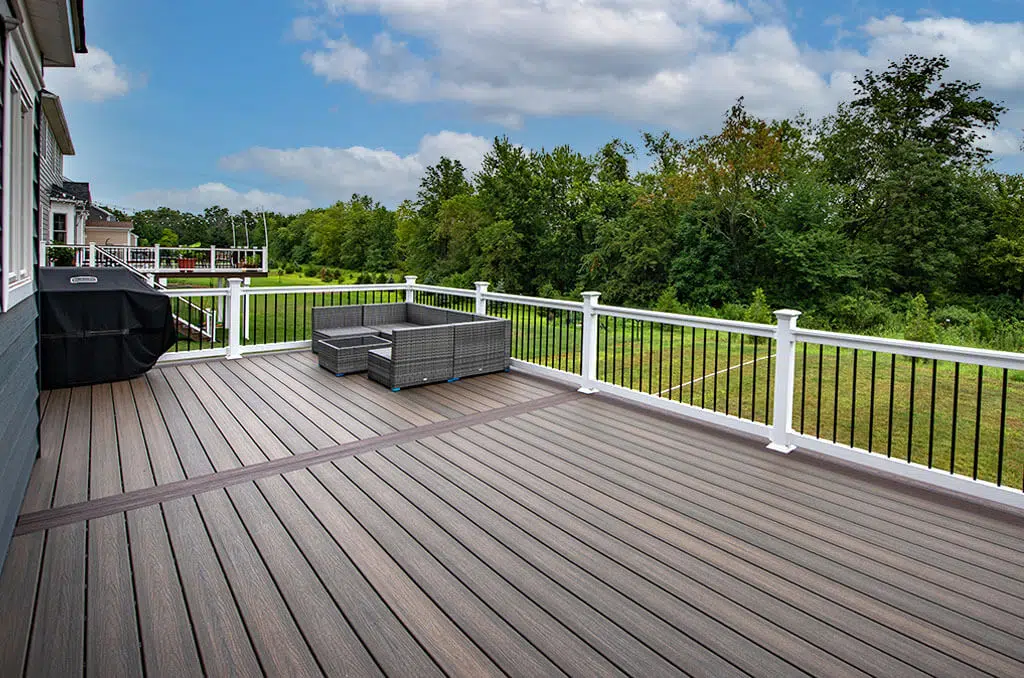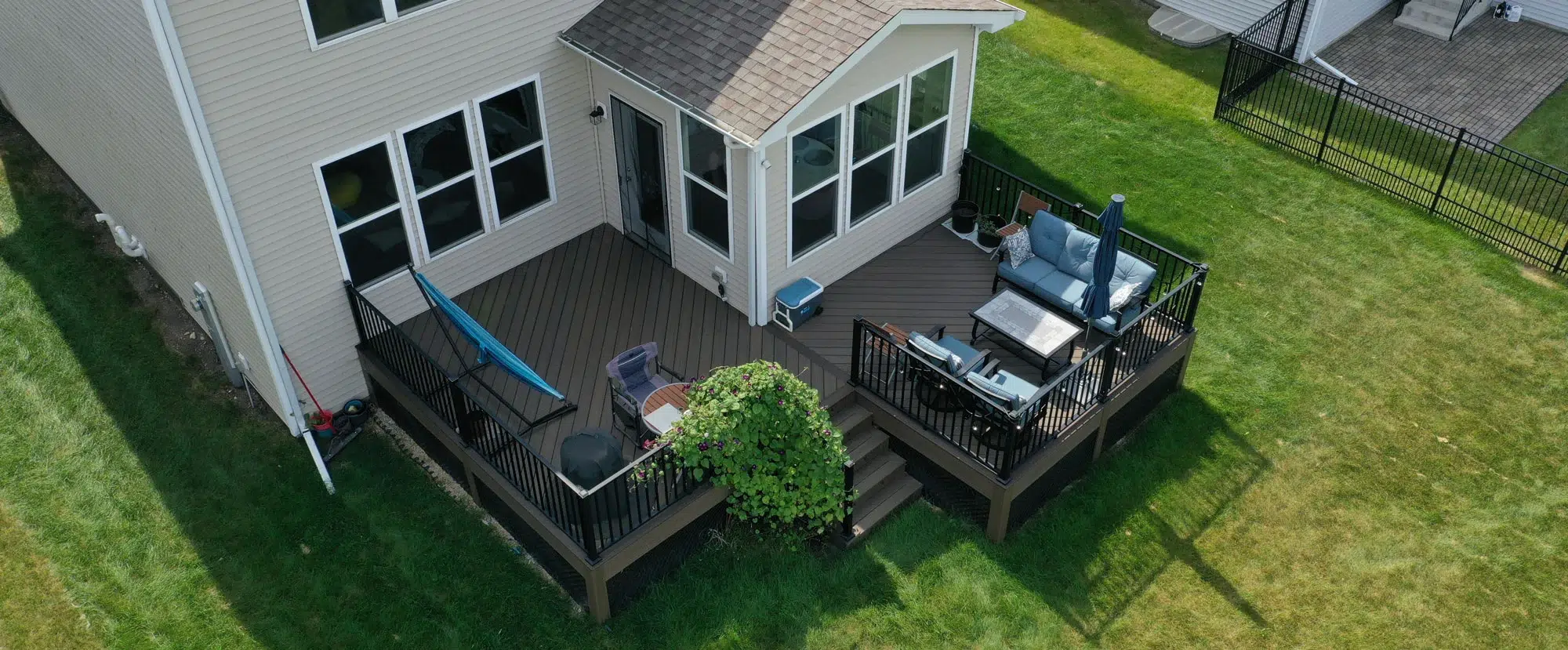
November 26, 2025
Summarize with AI:


Introduction
Choosing the appropriate deck dimensions for your home is a delicate endeavor because the right proportions will significantly enhance your outdoor space. At Royal Deck, we understand that small spaces can limit how comfortably you entertain your guests, while a deck that is too large can overwhelm your yard and stretch your budget. It is our goal to help you find the best deck size, which is why we carefully guide you through your decision, considering important factors like the layout of your lot, your lifestyle needs, and local considerations for Illinois and Georgia climates. By the end of this article, you will feel more prepared to choose the deck design that will support your everyday living vision for the years to come.
Understanding Average Deck Sizes and Standard Dimensions
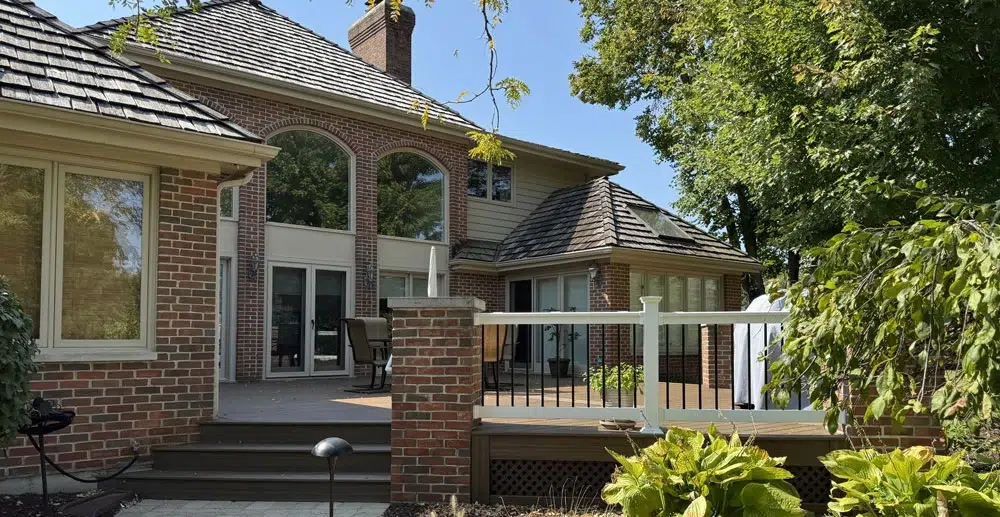
Across Illinois and Georgia, the average deck sizing we install is between 300 and 400 square feet, typically in the medium category for decks offering the flexibility for dining and entertaining without compromising yard space. Choosing the right deck footprint for your backyard is in part understanding the deck dimensions most homeowners lean toward. Standard deck sizes can be categorized into the following categories:
- Small: 100 to 200 square feet
- Medium: 200 to 400 square feet (common back deck sizes)
- Large: 450 square feet and above
The deck sizes chart below shows standard deck sizes help with a better visualization of how much room you actually need.
| Typical Deck Size Category | Common Dimensions | Square Footage | Accommodates (people) | Best Suited For |
|---|---|---|---|---|
| Small | 10’x10′, 12’x12′ | 100 – 144 | 4 – 6 | Intimate gatherings, small yards |
| Small-Medium | 12’x16′, 12’x20′ | 192 – 240 | 6 – 8 | Family dining, small groups |
| Medium | 14’x20′, 16’x16′ | 224 – 256 | 8 – 10 | Small to medium groups, multiple zones |
| Medium-Large | 16’x20′, 14’x24′ | 320 – 336 | 10 – 12 | Medium to larger groups, grill + dining + lounge |
| Large | 20’x20′, 24’x24′ | 400 – 576 | 12 – 20 | Large gatherings, outdoor kitchens, hot tubs |
It helps to think of simple proportion guidelines to better assess the best deck size, like the 20% rule, keeping your deck 20% of your home’s square footage. A 300 square foot deck would better suit a 1,500 square foot home, a 400 square foot deck for a 2,000 square foot home, or a 500 square foot deck for a 2,500 square foot home. Another approach could be to keep the largest room in your home, larger than your deck, to balance your indoor and outdoor spaces.
In deck design, we also highlight your preference for your deck to be 2 inches lower than your door because of the transition from your doorway. The seasonal changes will affect what debris and or snow gets stopped by the door. Plan for the proportion and elevation of your deck to be functional and aligned with how you will use it.
Key Factors That Determine Your Ideal Deck Size
While inspiration from Pinterest or a friend’s deck is valuable and average deck dimensions offer a good starting point to understanding what most homeowners choose, the ideal size for your deck ultimately depends on your property size, your daily lifestyle, and your budget. You likely use your home differently than your next-door neighbor, and every yard in Illinois or Georgia has its own limitations and possibilities.
 Home Size, Yard Space, and Property Proportions
 Home Size, Yard Space, and Property Proportions
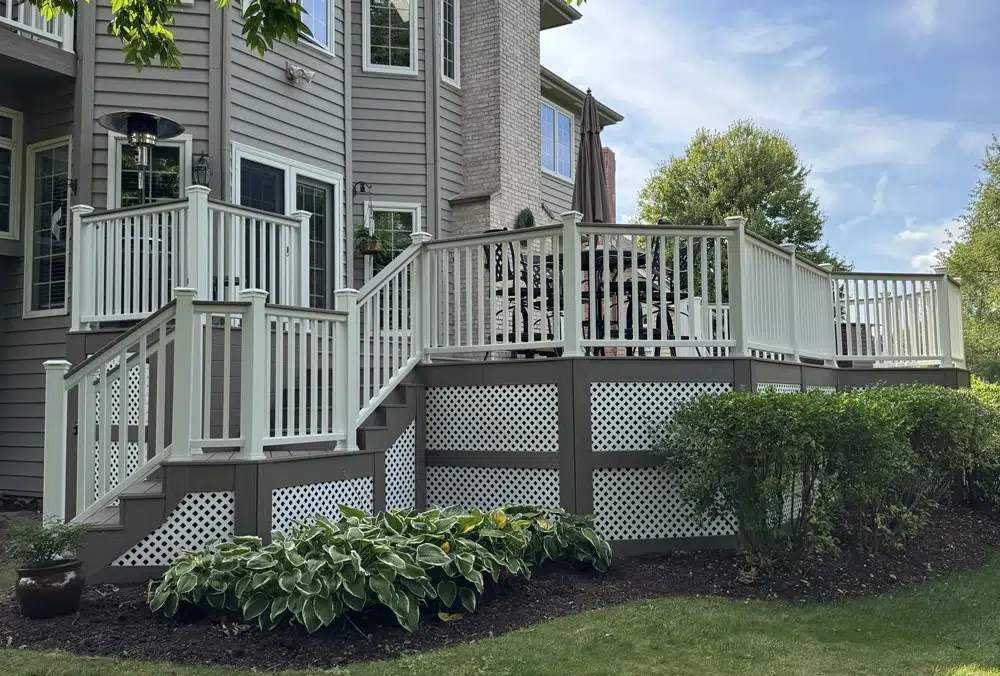
The “20% rule” of keeping your deck 20% smaller than your home’s square footage is not a requirement, but it sets the tone for maintaining balanced proportions between your home, your yard, and the final footprint.
The size of your yard also plays a critical role in deciding the surface of your deck. Keep in mind existing patios, pools, and gardens when planning placement, and account for walkways and utility locations. Plan to build 10 to 15 feet from property lines and keep your deck under 40% of the backyard area for privacy and visual balance. These setback distances comply with most residential zoning requirements across Illinois and Georgia. However, zoning rules vary between municipalities, so having your home’s plat of survey helps confirm setbacks, lot coverage limits, and any other restrictions before finalizing your deck design layout.
Intended Use, Lifestyle Needs, and Furniture Planning
Different activities require different footprints. Consider how you intend to use your deck. A comfortable deck allows for approximately 20 square feet per person. That translates to 200 to 240 square feet for 12 guests or 300 to 400 square feet for gatherings of 15 to 20 guests.
Relaxation for six requires 144 to 192 square feet with a bistro table and lounge seating. A dedicated dining zone would need 160 to 200 square feet to allow chairs to pull back. For cooking, dining, and lounging zones, aim for 320 to 360 square feet to avoid crowding. Keep in mind that outdoor kitchens, hot tubs, and fire pits will require added square footage for comfort and per zoning regulations.
Mark your deck’s layout with stakes and strings, outline the space for furniture, and assess if all the pathways feel appropriate and spacious enough for hosting.
Budget Reality and Total Cost Considerations
A Royal Deck entry-level deck in Illinois or Georgia ranges from $76 to $113 per square foot with materials and labor, excluding demolition. Generally, entry-level projects for decks with the standard 4 feet wide, 5 steps are:
- 12×12 deck begins around $16,500+
- 16×16 deck averages $21,500+
- 16×20 deck begins around $23,800+
- 24×24 deck often starts near $39,000+
Consider additional fixed costs like $100 to $500 for permits, $75 to $150 per inspection, and $500 to $1500 for site preparation.
While composite may cost 15 to 25% more upfront, in comparison to wood, it eliminates ongoing maintenance expenses over 10+ years. The choice to upgrade from wood removes the $500 to $800 staining, sanding, and board replacement costs and can end up saving you $3000 to $5000 for a deck that will maintain its appearance for that decade and even longer. To gauge cost better, you could use an estimation calculator online or call us at Royal Deck for a free composite deck consultation. We help you choose the best deck size and layout to fit your lifestyle and budget long-term.
Common Deck Sizes: What Works Best for Your Situation
Medium decks represent the average size deck out of Royal Deck installations in Illinois and Georgia for their balance of space and comfort. However, we have broken down the advantages and limitations of a small, medium, or large deck’s footprint, and how it can help decide which is better suited to your lifestyle.
Small Decks (12×12 to 12×16) – 144 to 192 Sq Ft
Smaller decks easily host 4 to 6 people, and they are practical, budget-friendly, and inviting without taking over your yard. Our entry-level projects often start from $16,500 to $18,600 budgets and are built and delivered within 7 days. They are ideal for small households and perfectly suit homes between 700 to 1200 square feet. They may not accommodate multiple zones for dining, grilling, and lounging, but you can enhance functionality with built-in benches, planters, or foldable furniture.
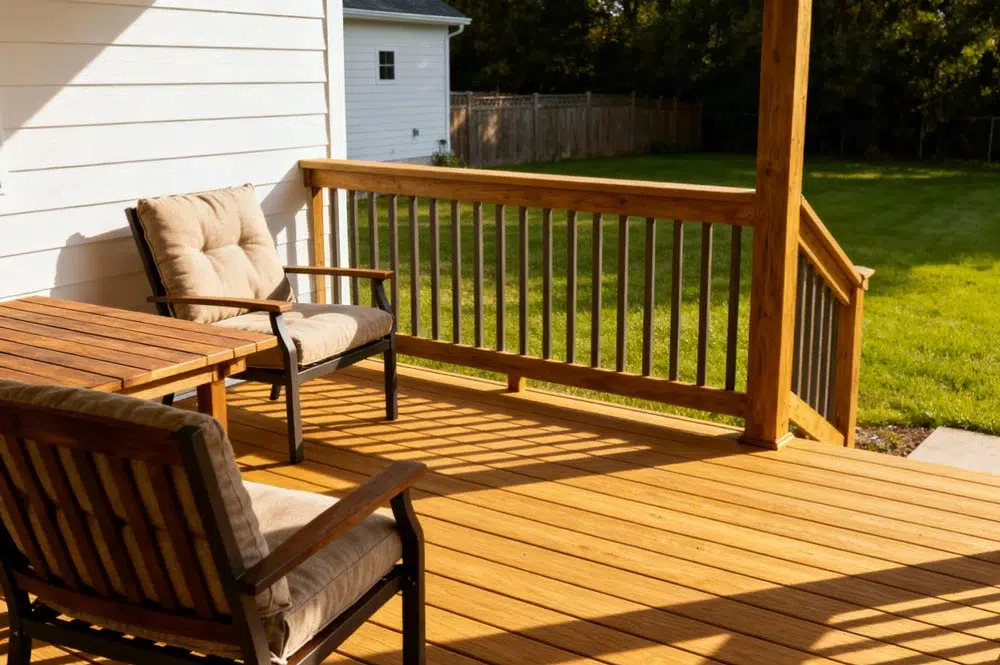
 Medium Decks (16×16 to 16×20) – 256 to 320 Sq Ft
 Medium Decks (16×16 to 16×20) – 256 to 320 Sq Ft
Medium decks are a sweet spot between space, functionality, and cost. Which is why many homeowners opt for decks around 300 square feet. They have the capacity to host 10 to 12 people and allow room to incorporate grill, dining, and lounge zones without crowding the space. Our entry-level medium decks range from $21,400 to $24,000, and they pair well with a 1400 to 2000 square foot home. If you entertain regularly, these size ranges are ideal for your lifestyle. However, it could challenge the rest of the space for a yard under 5000 square feet.
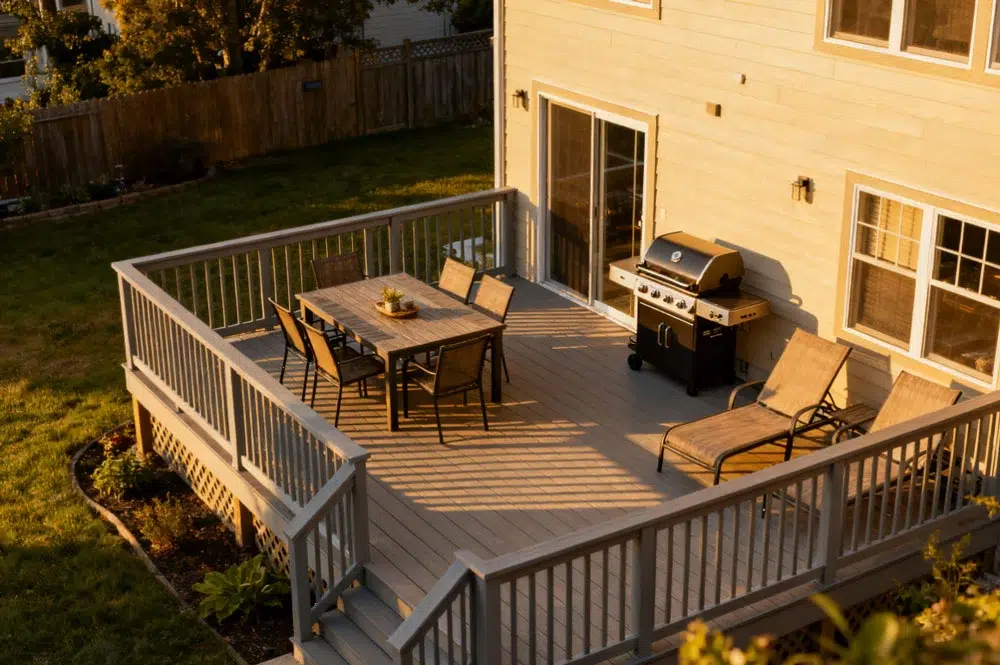
Large Decks (20×20 and Above) – 400+ Sq Ft
 Large Decks (20×20 and Above) – 400+ Sq Ft
A larger deck square footage turns your deck into a premium entertainment space and the perfect deck size for table and chairs. With their larger hosting and zone capacity, it opens up design possibilities and gives you room for features like kitchens, bars, hot tubs, and screened rooms as fully separate outdoor spaces. This $30,000+ investment is ideal for 2500 square foot or larger homes, on properties 8000 square feet or more. When you choose a large deck with added features, you should also consider that it will require particular permitting, exceeding 10 days in building time. However, a composite would be your best choice to reduce maintenance costs and time.
 How to Measure and Visualize Your Ideal Deck Size Before Building
 How to Measure and Visualize Your Ideal Deck Size Before Building
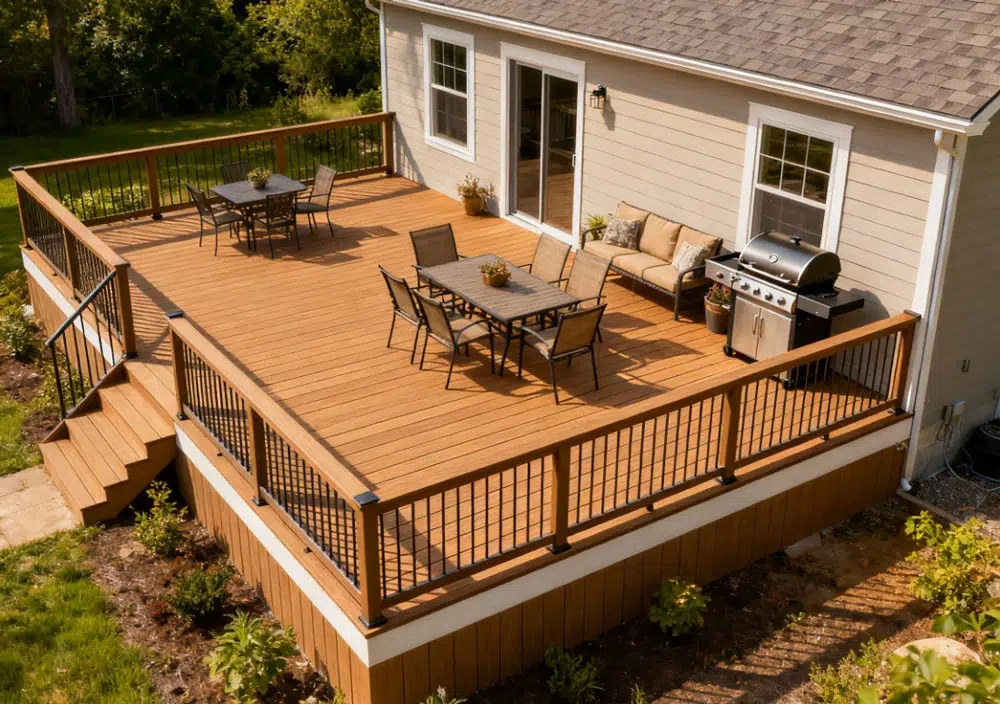
The best way to avoid costly mistakes is to visualize your deck before construction and confirm how you wish to use it. Here is a 5-step guide for a hands-on approach, making the results of your deck design fully intentional.
- Initial Property Measurements: Use a 100-foot measuring tape to mark yard boundaries, verify setbacks from your plat of survey, and identify fixed obstacles like AC units, trees, or utility boxes.
- Physical Layout: Use garden stakes and a visible string to outline the deck you envision, then walk the space to check proportions from the yard and from inside your home.
- Furniture Simulation: Place or outline furniture, grills, and seating areas, ensuring at least 3-foot pathways so you can test flow and comfort.
- Digital Tools: Consult online deck planners, size calculators, 3D visualizers, or applications from manufacturers like Trex, Timbertech, or Deckorsators to help refine your layout. This is supplementary to the above step, but not interchangeable when seriously planning for your deck footprint.
- Professional Consultation: Call for a Royal Deck expert to review your layout, confirm code compliance, and finalize a size that aligns with your home and lifestyle.
Why Composite Decking Makes Sense for Any Deck Size
Your choice to use composite decking is a reliable way to protect your investment, no matter the size of your deck. Its low-maintenance design eliminates the staining, sanding, and treating limitations that a wooden deck would have. Composite makes your deck more durable in Illinois and Georgia climates.
For small decks, composite guarantees consistent color, no splinters, and minimal seasonal upkeep over its 25 to 30 year lifespan, which protects even a modest budget. For medium decks, it eliminates the high maintenance every few years and makes composite the most cost-effective long-term choice. For large decks, composite requires minimal upkeep, and it is fade and stain-resistant even for high-traffic areas and highly visible surfaces.
All those benefits of composite are true across all sizes. Additionally, the material is not susceptible to weather changes, moisture, and insects. Composite is a modern and eco-friendly solution that is available in a wide range of widths, colors, and finishes to match your home effortlessly.
Common Deck Sizing Mistakes to Avoid
After deciding on a deck design that feels comfortable and balanced, securing your investment depends on how well you avoid some of these common mistakes:
- Building too small: Remember to allow for 3-foot pathways to avoid cramped layouts and costly expansions down the line.
- Building too large: Avoid overwhelming your yard and creating unused areas
- Ignoring codes: Royal Deck custom decks are always built with permits, respecting setbacks, and within HOA regulations to avoid fines and failed inspections.
- Poor planning: Ensure your deck is smaller than the largest room in your home. When measuring the furniture, remember chair clearances, traffic flow, and climate factors like drainage, shade, and snow. Skipping professional guidance can turn small oversights into expensive errors.
Ready to Build Your Perfect Deck? Take These Next Steps
Understand your yard, assess your lifestyle, and confirm the way you want to enjoy your outdoor space every day in order to come up with the right deck size and layout for your home. With the right proportions, thoughtful planning, and a clear vision, you can create an area that will feel functional, spacious, and aligned with your home. If you are ready to bring that vision to life, Royal Deck’s Illinois and Georgia teams will design and build a perfectly sized composite deck tailored to your needs. Schedule your free in-home composite deck consultation today.
Frequently Asked Questions
 What is a good deck size for entertaining?
If you entertain often, a deck between 256 and 320 square feet will give you room for dining, lounging, and a clear walking path to host 10 to 12 guests. In this range, you will have a balance of comfort and functionality.
How big should my deck be for my house?A helpful guideline is to keep your deck at or below 20% of your home's square footage. This keeps the structure visually proportional while still giving you plenty of usable space. Your Royal Deck estimator will also help evaluate your yard layout, setbacks, and lifestyle needs.
Is a 12x12 deck big enough?A 12x12 deck is ideal for small households; it can accommodate seating up to 6 people comfortably. However, it may feel limiting for dining, grilling, or larger gatherings.
What is the average size of a deck?Sizes for decks range as wide as home sizes and lifestyles. However, across Illinois and Georgia, the average deck size we build at Royal Deck ranges from 300 to 400 square feet, which would fall in the medium category.

As a leading deck builder in Illinois and Georgia, Royal Deck specializes in creating stunning new decks, resurfacing existing ones, and designing porches that beautifully enhance homes.