March 19, 2026Updated: May 18, 2026
Summarize with AI:



Alex Vieru
Reviewer"Spring is the most important maintenance window of the year for a composite deck, especially in Illinois. After a winter of freeze-thaw cycles, the first thing we check is the substructure: probe the joists, inspect the ledger connection, and look at the footings before touching the surface. Any salt or ice melt residue needs to be flushed off early before it dulls the cap layer. In Georgia, the window opens earlier: mold can start developing in shaded areas by February, so we tell homeowners down there to start their spring routine 4 to 6 weeks ahead of Illinois. A couple of hours of focused inspection and cleaning in spring will protect a 25-year deck from issues that would cost thousands to fix later."
Your composite deck has endured freeze-thaw cycles all winter. It’s accumulated debris, and hasn’t been used in months, which is why spring deck maintenance is essential to protecting your investment and ensuring a safe, beautiful outdoor space throughout the summer season.
At Royal Deck, we understand that composite decking from Trex, Timbertech, and Deckorators is engineered for exceptional durability and a 25 to 30 year lifespan. But even the highest-quality composite requires intentional seasonal care to perform at its best.
By the end of this article, you will feel more prepared to inspect, clean, and set up your composite deck for a full summer of outdoor entertaining, and you will know exactly when to call a professional rather than attempt repairs on your own.
 Why Composite Decks Still Need Spring Maintenance
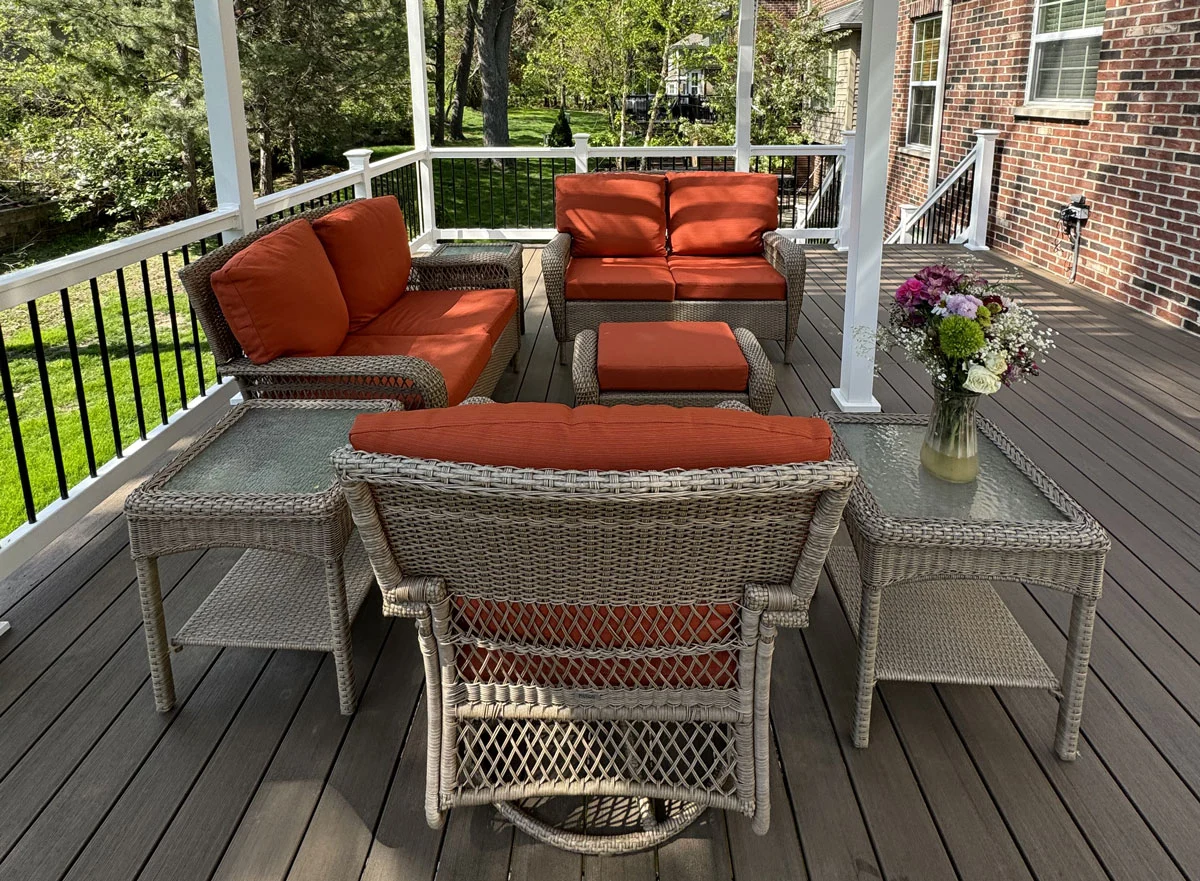
One of the most persistent misconceptions homeowners have is that composite decking being marketed as “low-maintenance” means it requires no maintenance at all. Low maintenance is not the same as no maintenance, and spring is the critical window to address what winter has left behind on your deck surface, in the board grooves, and in the substructure underneath the boards.
Over a typical winter, composite boards can accumulate pollen, debris, and organic matter in the grooves between planks. If left unaddressed, this creates conditions where surface mold and mildew can take hold. In Illinois, the dramatic freeze-thaw cycles between December and March add stress to the fasteners and the pressure-treated substructure under the composite deck surface. In Georgia, the combination of mild winters and early, humid springs creates ideal conditions for mold to develop as early as February, which means Georgia homeowners often need to begin their spring maintenance routine several weeks earlier than Illinois homeowners.
Keep in mind that a composite deck is a valuable investment. The small amount of time invested in proper spring care protects that investment and prevents premature repairs or board replacements.
Step 1: Spring Inspection of Your Composite Deck
Before starting any cleaning or repair work, a thoughtful walk-through helps you spot small maintenance needs early, keeping your outdoor space safe and beautiful for the sunny months ahead.
 Substructure Inspection
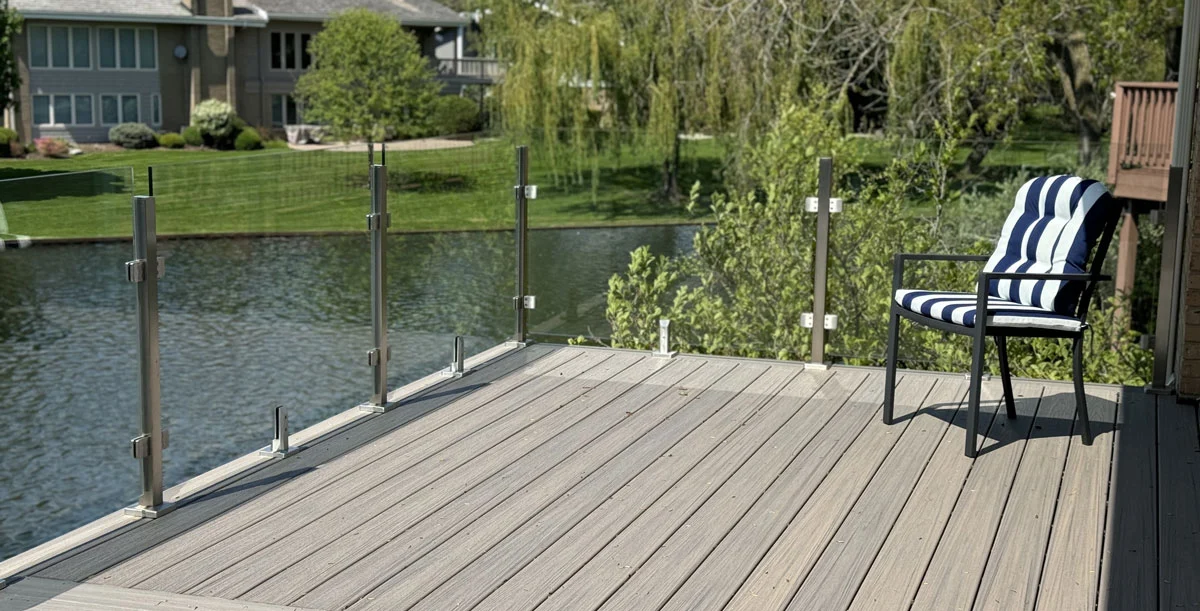
Your deck’s safety relies on the pressure-treated foundation beneath it, and composite boards can conceal significant damage. Taking a moment to inspect the foundation helps avoid experiencing significant deterioration.
Focus on these four elements:
- Ledger board: Use a flashlight to examine where the deck connects to your home’s exterior wall. Ensuring the flashing is tight and the wood is dry helps keep this critical connection point strong.
- Joists and beams: Look for sagging, soft spots, or discoloration on the exposed framing. Press on suspicious areas with a flathead screwdriver. If the tip goes through further than a quarter inch without resistance, it is a sign of rot being present. This is when to call a professional.
- Posts and footings: Verify if any posts have shifted, cracked, or leaned. In Illinois, deep frost can displace concrete footings over winter, and even a small shift can create meaningful instability at railing height.
- Hardware and connectors: Take a look at your joist hangers, post bases, and brackets for rust or corrosion, which compromises their holding strength over time.
Composite Surface and Components
Once you are satisfied with the supporting structure of your deck, it is time to look at the composite boards and the hardware above the framing.
- Walk the entire deck and feel for stability and consistency underfoot. A spongy feel could indicate moisture infiltration at damaged board edges.
- Examine the surface of any board cap that has separated from the core, which is more common in entry-level composite products.
- Check the spaces between boards for trapped debris, and ensure that water can drain and flow freely off the deck surface.
- Shake every rail section firmly, watching for movement at the posts that can cause a safety concern.
Step 2: Cleaning Your Composite Deck in Spring
A fresh spring clean does wonders for your deck’s vibrance. To protect your composite boards from staining and premature wear, the key is to remove the winter’s accumulation and surface grime, which will also reveal any damage that was hidden by the debris.
 Products and Tools to Gather
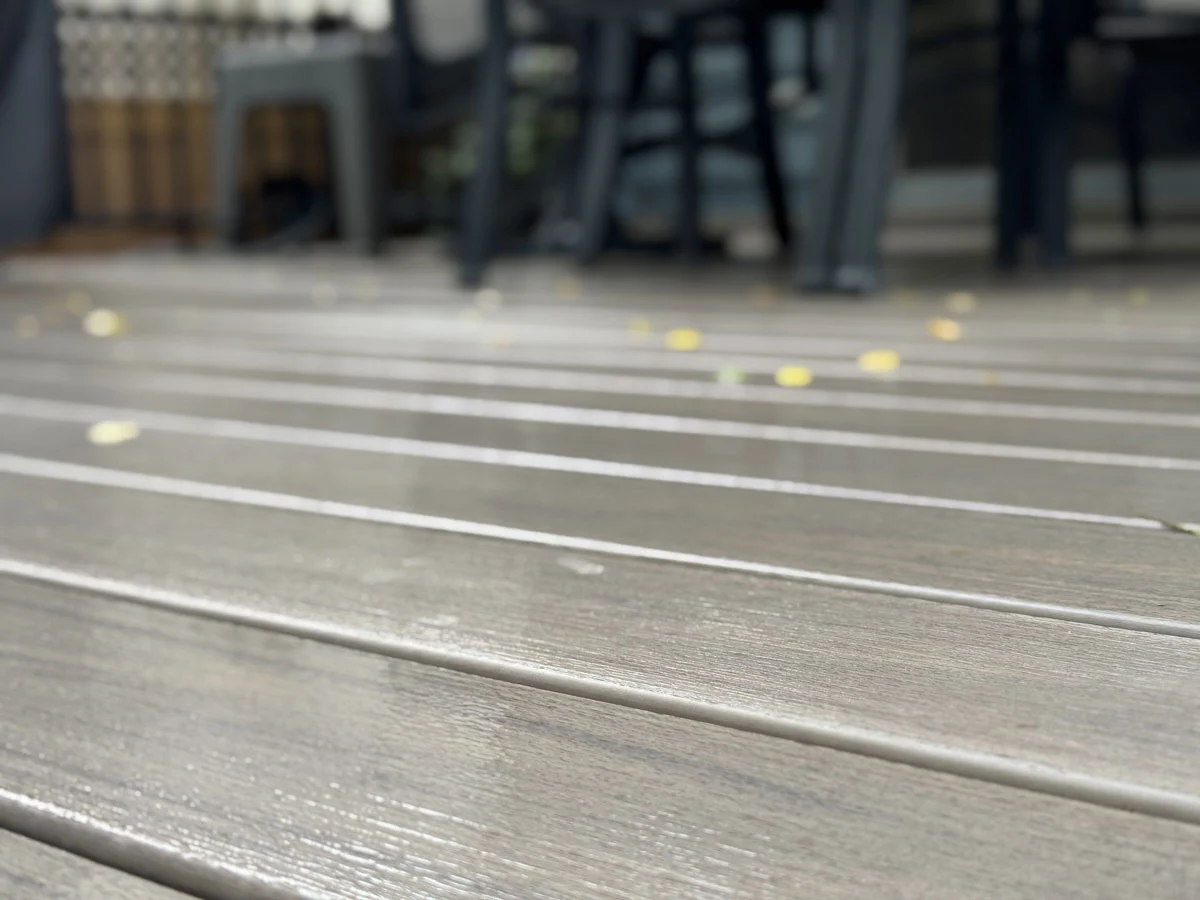
Using the right tools before you begin the cleaning process makes it faster and protects the composite cap layer from damage.
What NOT to use: To prevent stripping the protective cap layer of the composite boards, avoid oil-based cleaners, chlorine bleach, abrasive scrubbers, paint strippers, and solvent-based products. Doing so will protect your manufacturer’s warranty, which will keep your savings intact on your deck investment.
- Soft-bristle deck brush (never metal or wire bristle)
- Garden hose with spray nozzle, or pressure washer set to a maximum of 1,500 PSI
- Composite-approved deck cleaner (Trex, Timbertech, and Deckorators each publish lists of approved cleaning products on their websites)
- Plastic putty knife or composite-safe groove-cleaning tool
- Composite-safe mold remover for any affected shaded areas
Cleaning Process, Step by Step
- Remove all furniture, planters, and accessories from the deck surface.
- Sweep the entire surface with a soft-bristle broom, carefully removing the debris trapped in the grooves between boards.
- Use a plastic putty knife to gently lift any trapped material from between the planks.
- Rinse the surface with a garden hose to remove loose particles before applying any cleaning product.
- Apply your composite-approved cleaner and let it sit for the manufacturer’s recommended time.
- Scrub with a soft-bristle brush in the direction of the board grain. Scrubbing across the grain can damage some composite products.
- Rinse thoroughly until water runs clear over the surface and in the board grooves.
Pressure Washing Composite Boards
A pressure washer can be a great time-saver when used with a light touch. The nozzle should be at least 8 to 12 inches from the surface, using a fan-tip nozzle rather than a pinpoint jet, under 1,500 PSI, and moving in long, steady strokes that follow the length of the boards.
For homeowners in Georgia, where spring arrives in early February and March, treating mold-affected areas with a composite-safe mold remover before the deep cleaning will deliver significantly better results.
Step 3: Composite Deck Repairs in Spring
These practical deck care and maintenance tips apply specifically to composite decking, which requires different upkeep than wood decking. Composite boards cannot be sanded, filled with standard wood filler, or painted over, and repairs must be adapted to the specific product and generation of boards you have installed.
Tightening and Replacing Fasteners
It’s natural for materials to expand and contract slightly with the seasons, loosening fasteners, especially in climates with significant seasonal swings. Illinois homeowners experience dramatic temperature cycles between cold February nights and hot July afternoons, causing boards to expand and contract repeatedly across the fasteners.
Listen for squeaking or movement underfoot when walking the deck surface. If a board shifts when you step on it, the hidden clip beneath it may be loose, which would require removing the adjacent board to access the clip. Involving a professional will help ensure that any new hardware below the composite deck uses stainless steel or composite-approved coated fasteners. Galvanized hardware will react with composite materials and leave surface staining that bleeds upward through the board.
Replacing Damaged Composite Boards
One of the best things about a composite system is the ability to replace any single board when needed. The key rule is to match the exact product line, color, and generation of your existing boards, because composite products are often reengineered. A different product generation can appear noticeably different even if the manufacturer and color name match.
Before ordering replacement boards, locate your original installation documents, which should include the product name, color name, and board profile.
Step 4: Protecting Your Composite Deck for Summer
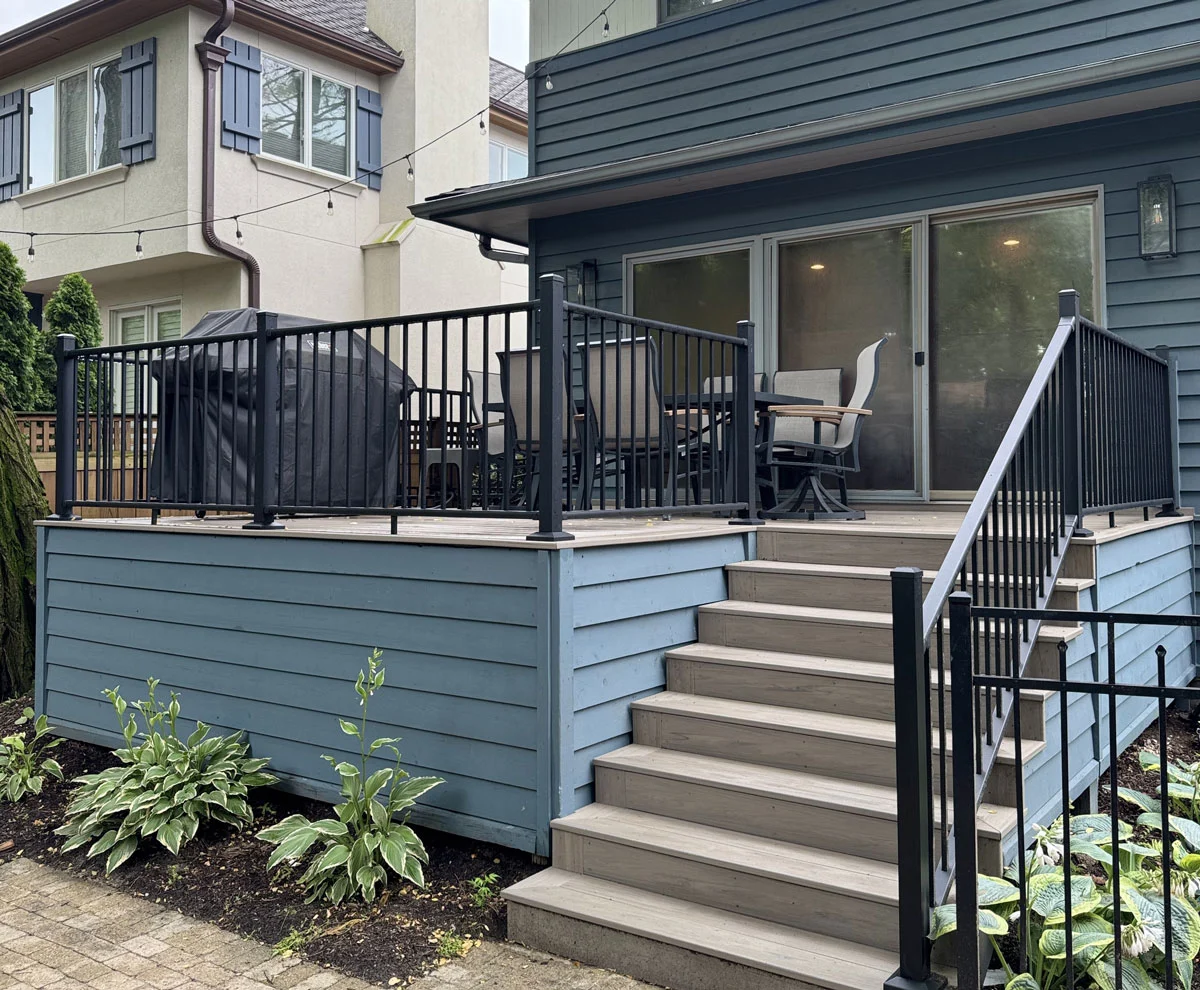
Unlike wood decks, composite decking does not require annual staining, sealing, or painting. Applying these products to your composite boards would trap moisture beneath the coating and interfere with the board’s surface performance. Protecting your composite deck for summer is about establishing smart habits that preserve the surface over the seasons.
- Place furniture pads under all metal legs to prevent scratching the composite surface and to avoid rust transfer from metal feet sitting on a wet deck.
- Position a grill mat or heat-resistant barrier under any outdoor grill, because composite boards are vulnerable to heat damage from grease fires and the radiant heat from gas grill side burners, which can cause discoloration that is difficult to remove.
- Check your product’s care guidelines for manufacturer-recommended composite protectants.
- Move planters and outdoor rugs periodically throughout the season so they do not trap moisture and block UV exposure, which creates uneven fading patterns that become visible over multiple summers.
Step 5: Setting Up Your Composite Deck for Summer
The final stage of spring preparation is configuring your outdoor space for maximum enjoyment and safety. A few focused deck maintenance tips will ensure that the protective habits you establish now carry through the entire season with minimal effort.
Furniture, Shade, and Lighting
Distribute your heaviest furniture pieces across the deck surface rather than concentrating them in one area to reduce overloading on individual boards and the frame underneath, which is particularly important on larger decks in the 16×20 or 24×24 foot range.
In Georgia, where summer heat indexes can exceed 100 degrees Fahrenheit, your composite surface temperatures can rise significantly if directly exposed to the sun. A patio umbrella, retractable awning, or pergola will improve comfort and measurably reduce stress on your composite boards’ protective cap layer. Add to the atmosphere and the safety with post-mounted or integrated LED deck lighting.
Non-Slip Safety Measures
For the transition areas between the deck and the home’s interior, choose mats with an open-weave construction that allows water to drain through. Other non-slip mats may trap moisture against the composite surface below.
Illinois and Georgia: Regional Spring Maintenance Considerations
While the maintenance steps above apply to any composite deck, the climate differences between Illinois and Georgia expose different priorities for homeowners in each state.
Illinois homeowners should begin their spring routine with a thorough rinse to wash away any winter salt or ice melt that may have been tracked onto the deck surface during winter. Any residue of calcium or magnesium chloride left on the surface across several months can cause surface dulling and should be flushed with clean water early in the season. Carefully inspecting the railing every spring is essential to staying safe and code compliant. It is reassuring to start the summer knowing that your railings can still withstand a concentrated load of 200 pounds at any point, per Illinois codes.
Georgia homeowners face a different set of challenges because of the heat and humidity. The warm, wet conditions create ideal circumstances for mold and mildew on composite boards, particularly in shaded areas where airflow is limited, beneath trees, and near the home’s exterior walls. The spring deck maintenance window in Georgia effectively opens in February or early March, well ahead of the schedule for our Illinois clients.
When to Call a Professional
If you start to notice structural or cosmetic deterioration beyond your usual spring maintenance, it is a signal that your deck has reached the end of its serviceable life. The priority becomes ensuring your outdoor space remains safe and visually appealing.
Consider reaching out to Royal Deck when you observe any of the following:
- Widespread board deterioration, fading, or surface damage that cleaning and minor upkeep can no longer address.
- Structural concerns, such as a sagging deck surface, a deteriorated ledger board, or footings that have shifted or cracked, are signs that the underlying framing has been compromised beyond what seasonal maintenance can resolve.
- An aging wood deck that requires annual staining, sealing, and repeated repairs. Learn more about the 4 reasons to upgrade your deck and why composite delivers far greater long-term value.
- A deck layout or size that no longer fits how your household uses the outdoor space, making a full redesign and installation the more practical path forward.
At Royal Deck, we specialize in new custom composite deck installations and deck resurfacing, replacing aging or structurally compromised decks with premium composite systems built to last 25 to 30 years with minimal upkeep. Our Illinois and Georgia teams will assess your current deck, walk you through the best replacement or resurface options for your home and climate, and deliver a finished composite deck that performs beautifully from the very first season. Schedule your free in-home composite deck consultation today.
Spring Composite Deck Maintenance Checklist at a Glance
| Task | When | Notes for Your Region |
|---|---|---|
| Rinse off salt and ice melt residue | Early spring | Priority for Illinois homeowners |
| Treat mold spots before cleaning | February–March | Priority for Georgia homeowners |
| Full surface cleaning with approved cleaner | Spring | Twice yearly: spring and fall |
| Substructure and ledger inspection | Annually | Check with a screwdriver for rot |
| Railing stability check | Annually | Illinois code: 200 lb concentrated load |
| Fastener check and replacement | Annually | Use stainless steel or coated hardware |
| Move planters and rugs | Monthly during the season | Prevents uneven fading |
| Grill mat placement | Before first use | Protects against heat and grease |
Sources
- Trex Care & Cleaning Guide – Composite-approved cleaning products, pressure washing limits & warranty conditions.
- TimberTech Maintenance Guidelines – Board cap protection, approved cleaners & seasonal care recommendations.
- Deckorators Care & Maintenance Resources – Color retention, UV protection & cleaning standards for capped composite.
- IRC R507 – Exterior Deck Construction Standards – Ledger attachment, railing load requirements (200 lb concentrated load) & footing specifications.
- NADRA Deck Inspection Checklist – Structural inspection criteria: ledger board, joists, fasteners & post-footing connections.
- AWC DCA 6 – Prescriptive Residential Wood Deck Construction – Substructure decay indicators, screwdriver probe method & joist inspection standards.
- Illinois Residential Building Code – Deck permit requirements, railing load standards & frost footing depth for Illinois climate conditions.
- Georgia Department of Community Affairs – State Minimum Standard Codes – Deck construction & inspection requirements for Georgia residential projects.
- USDA Forest Products Laboratory – Mold & Moisture Research – Conditions for mold development on composite and wood surfaces in high-humidity climates.
Frequently Asked Questions
 Does my composite deck need staining or sealing in spring?
No. Composite decking from Trex, Timbertech, and Deckorators includes an engineered protective surface layer that does not require staining or sealing. Applying these products can interfere with the board's intended performance and may void your manufacturer's warranty.
How often should I clean my composite deck?
A thorough cleaning with an approved composite deck cleaner should be performed at least twice per year, once in spring and once in fall. Weekly sweeping during the months when the deck is in regular use prevents organic debris from accumulating in board grooves, which is the primary driver of surface mold and discoloration.
Can I use a pressure washer on Trex or Timbertech composite boards?
Yes, with proper technique. Use a fan-tip nozzle, maintain a distance of 8 to 12 inches from the board surface, work in the direction of the board grain, and do not exceed 1,500 PSI. Higher pressure erodes the protective cap layer and causes damage not covered under manufacturer warranties.
What causes mold on composite decking, and how do I prevent it?
Mold develops when organic debris, such as pollen, leaves, and dirt, remains trapped in board grooves or beneath furniture and planters. In Georgia, warm temperatures and high humidity cause mold to develop more rapidly and earlier in the year than in Illinois or other northern states. Regular sweeping, periodic movement of accessories, and a composite-safe mold remover applied as part of your spring cleaning routine are the most effective preventive measures.
My composite boards look fine. Do I still need to inspect the substructure?
Yes, every spring. Composite boards can completely conceal significant structural deterioration in the wood framing beneath them. A deck that looks and feels normal on the surface can have joists, a ledger board, or post-to-footing connections that are seriously compromised, which is why a physical substructure inspection is non-negotiable regardless of how new the composite surface appears.
Is spring a good time to upgrade or replace an aging composite deck?
Spring is ideal for new composite deck installations and full replacements. Moderate temperatures allow materials to acclimate properly, and completed projects are ready well before the peak of outdoor entertaining season. Royal Deck's Illinois and Georgia teams complete composite deck installations and replacements throughout the spring season, and we offer free in-home consultations to help you plan a project that fits your timeline and budget.

As a leading deck builder in Illinois and Georgia, Royal Deck specializes in creating stunning new decks, resurfacing existing ones, and designing porches that beautifully enhance homes.